[00:00:03] Speaker A: Hey friends. Nico here. I'm so glad you're joining us for another edition of the Collective Table Podcast and our TCT Book Club series. If you've been following along, you know this is where we gather every month to read and discuss books that help us imagine a more inclusive, inspiring and grounded expression of Christian spirituality. Each conversation takes place live on zoom with the author and you're always invited to join in. If you'd like to be a part of future book club sessions, find the next session on our website calendar
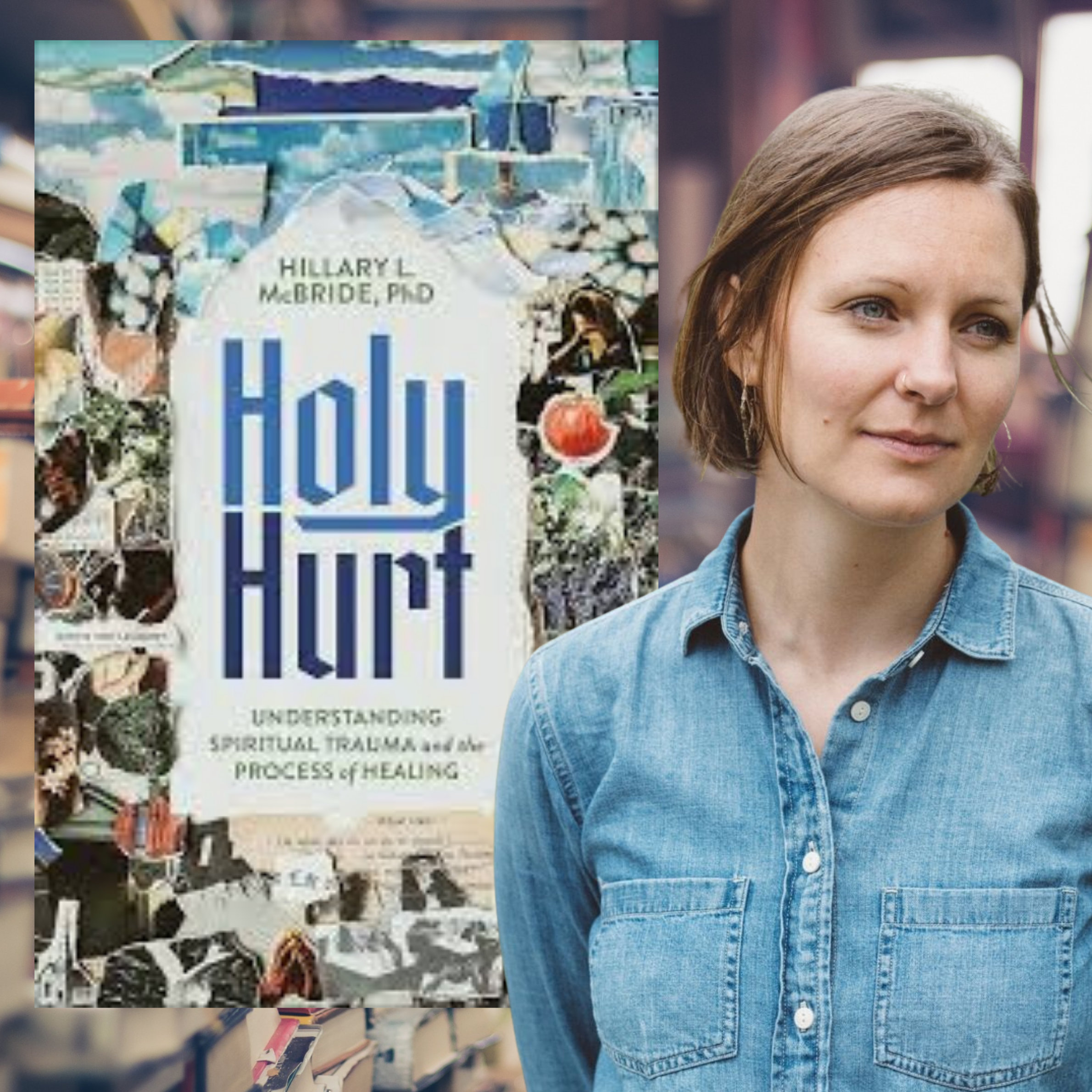
[email protected] calendar to sign up this month we sat down with Dr. Hilary McBride, an award winning clinical psychologist, researcher and the author of Holy Hurt. We discuss the realities of spiritual trauma and religious abuse and explore practical evidence based ways to rebuild trust, connection and hope on the healing journey. So settle in and enjoy this thoughtful and healing conversation between the TCT Book Club and Dr. Hilary McBride right here on the Collective table.
[00:01:05] Speaker B: So it's really my pleasure to welcome Dr. Hilary McBride to our book club tonight. Dr. McBride's registered psychologist and award winning researcher who's hosted the Other People's Problems and Holy Hurt podcasts. She has a private practice in Victoria, British Columbia. I did not realize that you were in British Columbia before this, so I'm jealous.
Congratulations.
And she's a sought after speaker and retreat leader. McBride is the author of the Wisdom of youf Body Practices for Embodied Living and Mothers, Daughters and Body Image. Her work has been recognized by the American Psychological association and the Canadian Psychological Association. We invited her here tonight to talk to us about Holy Hurt because this is our book club selection for this month at the Oceanside Sanctuary. And before you jumped in, Dr. McBride, one of our guests tonight said, hey, I'm new. I just jumped in on this as an opportunity to sort of check things out and I'm curious why you guys chose this book and I haven't had a chance to answer that question, so feels like now might be a good time to answer that.
[00:02:16] Speaker C: Why did you choose this book?
[00:02:18] Speaker B: Why did we choose this book?
So Janelle and I are the co lead pastors here at the Oceanside Sanctuary and Holy Hurt really struck me as kind of a no brainer when we were talking about what books to do this year year because a very large portion of the people who have ended up here at the Oceanside Sanctuary, I think directly intersect with the content of Holy Hurt have been down this road, have come from high control religious backgrounds and deconstructed, maybe reconstructed, maybe didn't still really wrestling with what it means for them to be people who consider themselves spiritual or religious.
And oftentimes folks end up here at our church because they're trying to decide if they can still be Christian in good conscience.
And so this book really felt like it would resonate with a lot of
[00:03:12] Speaker C: folks here at the church.
[00:03:13] Speaker B: So, Connie, to answer your question, that's why we chose it. And we're really excited to have Dr. McBride join us for a bit of Q and a. So welcome, Dr. McBride. Thank you for joining us tonight.
[00:03:25] Speaker C: Thank you. Thank you so much for having me. I'll just share full disclosure. We were just eating dinner as a family and we got really spicy food. And I don't know if any of you have had the experience where you're like, we, we finished eating a while ago and it's like the.
My body is still telling the story of how spicy it was. So if I'm panting, I'm not having a medical event. Just so you know. I'm just catching my breath.
[00:03:53] Speaker A: Mexican food is the primary cuisine around here. So I think this is true.
[00:03:57] Speaker B: This is true.
[00:03:58] Speaker C: Well, feel free to go grab water or anything. Thank you. Yes, thank you. I've got some here. And that may not be that. That. It may just be. It takes it time. It takes its time.
[00:04:10] Speaker B: How many?
[00:04:11] Speaker C: Yogurt? Yeah, yeah. Milk and yogurt. Yeah.
[00:04:14] Speaker B: So also, I'll just jump in here. The others know this already, but Janelle and I unfortunately have another thing to get to before we'll be finished tonight. So we're going to get started and then Nico, who you met, raise your hand. Nico, who's our youth and production coordinator, is going to be our co host and take it from there.
But if it's okay, I'd really like to read an excerpt from Holy Herd just a brief bit and then ask you for just your response to that. And then we'll jump in with some questions that we already sent you in advance. So that's mostly what we're going to talk about. But we also like for this to be a bit organic. So as questions come up, Nico's going to maybe field those questions, if they do in the chat, and interject those as well.
[00:05:02] Speaker C: Great.
[00:05:03] Speaker B: So I really, really appreciated by the way that you pulled in ecological systems theory. I was telling everybody earlier that I don't think I've ever read a Christian book or Christian adjacent book that sort of acknowledged the broader systems that really shape and form us.
And so I was tempted to read a bit from that. But this part actually really Struck me. It's from page 107, and it's where you're talking about people who come from high control sort of religious backgrounds. And you wr in religious families with high control, certain developmentally appropriate tasks and experiences are punished, forbidden, shamed, or called sinful or disobedient.
They include developing and expressing one's feelings and opinions, sexual exploration, experimenting with romantic relationships, and dating, even lying, boundary pushing, and rule breaking. Each of these is appropriate, even healthy, at certain stages of development. And each is meant to happen at a certain time when we have people who love and care for us around us to help us navigate the complexity, consequences, pain, and joy of how this shapes who we are becoming.
Without them, we cannot grow into full maturity, have a sense of self, or face the demands and challenges of the world.
And that jumped out at me because one of the things that we often talk about in one of our classes here is how for people who are raised in fundamentalist or high control expressions of religion, we're often given a way of being and thinking about the world, a way of thinking about God or spirituality or religion or justice or ethics or relationships and commitments, all of these things in ways that are fixed at a very early developmental stage.
Ways that we can think about those abstract ideas in really simplistic terms, and then we're told we can never change our minds about them.
[00:07:04] Speaker C: Yeah.
[00:07:05] Speaker B: And so we're, like, locked into this really limited way of knowing and sensing and being in the world. And I really appreciated that you highlighted that without the ability to grow beyond those early developmental ways of thinking, we can't mature, we can't grow in healthy ways. And so those, those high control expressions of religion really inhibit or healthy growth and development.
It's not just about differences of opinion about esoteric ideas. It really inhibits us in harmful ways. And so I wonder, when did that become real to you? When you realized that this was about sort of arrested development and figured out, you know, that you wanted to address that?
[00:08:00] Speaker C: Yeah, there's a few different ways that I feel myself wanting to respond to that question. And one like, I love that passage that you chose, or I love that you chose that passage because it feels like it strikes the heart of so much of what these really oppressive and abusive religious systems do. Like, they. They create fragmentation of the self and erosion of the self. In fact, that's not even really a hidden agenda. In many cases, people will say, like, die to self. Like, there's no deception, or kind of like, back door to that. It can actually be quite explicit and so one of the ways that that happens, whether you could, you know, some people might say that that's intentional. Other times it's like, you know, people who don't have access to self development, trying to help other people with. With their. With their humaning. And it's really hard to help people grow beyond what they were never given. But there's.
There's a few things that come to mind. The first is I remember in my.
I think I might have been in my graduate studies, I was doing my master's, and I had a mentor who I really looked up to, and she was a developmental psychologist, and my dad's also a developmentalist. And so, you know, I kind of like, have had this developmental flav to my work most of my life and. Or my. Most of my clinical and academic work. And I remember I was looking up to her just like, in terms of how she was a parent and I wasn't a parent yet, and we were going to some event together, and so I got in the car with her and I said, how are you doing? What's going on? And she said, oh, something so exciting happened today. My daughter lied to me because she stole something.
Ugh. And we just. And there it was. There was something about her reaction where I was like, excuse me, ma', am.
You're excited. She stole and she lied. And this is how you're feeling and you're telling me about it, so you're not ashamed there's an opportunity here. You're framing this in terms of something important happening for her in between the two of you. And that for me, really shook me. I mean, I. I would say there was a lot that had to unfold after that to start to begin to understand all of the ways these systems erode senses of self. But it kind of the first time I ever heard lying and stealing have a developmental purpose, or like, they could potentially.
And. And then when I think a little bit later about maybe more understanding systems and, like, what happens to people who live in systems that kind of, like, choke out the self.
I notice lots of people in my practice having a very, very hard time with facing the demands of adult living, like knowing who they are, knowing how to set boundaries, knowing that they're allowed to have a no, knowing what their yes is, being able to figure out and negotiate who am I in the world and what does it mean to be a self? And can I want things and can I want things that are different than the things that the other people around me want? And when we extricate that phenomena of I know myself and I can face life and I have what it takes and I know where to reach, to pull in help and I cannot know. And kind of like all of those important things about health and adulthood. And it seemed like, you know, when we understand that from a developmental model, oh, there's a lot of stuff that has to happen kind of in sequence to be able to do those things later. So people come to therapy and they go, oh, you know, like, I don't know what I want in my life or how to want, but it has nothing to do with my upbringing. And everything was great and like, you know, everything was awesome. In fact, I was really loved. My parents, like, hit me, but it's because they loved me. It was totally fine.
And as we start look through what was going on, there was so much about what the, the building blocks to get to I know who I am that were just never allowed. And they would threaten connection, they would threaten safety. So it's, I think, like, probably with most of my work, the things that I write and research, because my patients are talking about stuff and I'm like, where is the resource on this? And then I look, I'm like, oh, I, I better write one, I better write one, because it's not here. But really, it's like people's lived experiences, how that ricochets off of me being like, oh, whoa, I didn't, I didn't know that that could be good. And that certainly wasn't what I was told. So that's kind of a long winded answer to your question.
[00:12:44] Speaker B: No, no, thank you, I appreciate that. I. I think it's really helpful to understand where an author is coming from, how the, the subject has intersected with their life. And so it's really helpful.
So obviously, like, we're a church, right? Or some of us are part of a church, and a church that's wrestling with how to meet people who are coming to terms with a lot of these things. And also, for some reason, still looking for like a place to worship and be people of faith. Right. Which then puts them into, like, conflict with their triggers.
And so a lot of the questions that we sent you in advance have to do with like, hey, how do we. How would you suggest we approach some of these things? And as you talked, it occurred to me that, you know, the Bible as a text can be incredibly problematic because of lying, for example. Right. It's used as a book to, you know, tell people that they absolutely can never lie, that that's always going to put them in eternal danger if they do that.
And so I'm wondering, just get our first question. You know, given that the Bible contains very coercive language, at times, even violent language, how do you think communities like ours who are trying to live into a more healing space can help people reconstruct an image of God that isn't rooted in that sort of violent or coercive imagery?
[00:14:27] Speaker C: Yeah, a few things came up reading that question ahead of time.
And I think a very, very important one is understanding the multiplicity of hermeneutic around a sacred text. Like, there are an infinite number of ways of reading and interpreting a text, even a sacred text.
And that's often not something people are offered in high control spaces because it tends to be a strategy around thought reform to imp. Inerrancy or to equate questioning or curiosity or wrestle with the meaning of as a kind of threat to your allegiance or threat to your salvation or threat to spiritual security or relational security.
And so people are often discouraged in certain contexts or prohibited from even knowing it's an option to think about a text in a different way. And I think if you can take that off the table, like this is this critical thinking or this engagement and maybe cultural analysis of the text, when that can be a possibility again, then all of a sudden we can look at things with a little bit more flexibility and understand how they live in place and time, how stories have been cultural phenomena as tool, teaching tools and have been like, played a role in a society. And we tell, we tell stories in our society all the time that in thousands of years people are going to look back and go, what? You. You did what? Or you believed what? Or like you all sat around this little box and you looked at this instead of talking to each other or like, well, you know, people will look back and go, oh, it must have been a sacred object. Right, if everyone was gazing at it. So, you know, and to understand place and time is a really important way of creating some more flexibility around some of those images. So even the ability to say, like, well, what's the usefulness of a violent God?
What's the cultural utility?
What does it actually do strategically for a group of people to believe this? Like, our deity has this kind of power. Well, maybe it helps us feel like we've got a really good in group bias. Like, okay, we're gonna, we're gonna do it right so that we can hang out together. Because it's a wild world out there and it's, you know, dog eat dog in terms of culture. So, like, okay, maybe this helps us belong to each other, or maybe it gives the people in power a little bit more power because they're like, I got God on my side and this is the kind of God I got on my side. So, like, understanding not just to dismiss that, but to actually make sense of imagery around a violent God as having had a place in a group of people's stories, a way of making meaning as a way of creating safety and security, which also creates some compassion for us. Like, what are the stories we tell about God that are really about us finding safety and security? And maybe we're doing the same thing. We're just kind of like changing it up. And isn't that what people do? So. So I think that if we can hold that a little looser and understand on some level, maybe the interpretation that we were handed about who God is is a better representation of that context or what these people in this context want us to believe now because they're trying to do the same thing to us, like enact some power over us by creating this really scary image. Or again, I think the importance of understanding hermeneutic.
There's a philosopher named Michelle Panchak whose work I reference a few times in the book, and she has talked about hermeneutic injustice, which is that people in high demand, high control spaces are often forbidden from understanding frameworks, tools, meaning making structures which would empower them to think critically. And so if people are forbidden from accessing interpretive tools, including things like basic psychological skills or mental health resources, or access to therapy or ways of understanding how systems work and how power can be conferred, if people don't have access to and are forbidden from accessing tools of meaning making, interpretation, making sense of the world, grasping things, then they become much easier to control.
So if we can give people like this one story, it serves a purpose when actually, like, there's all of these options available about how to interpret what's going on in the Bible.
Yeah, yeah, I love that.
[00:19:24] Speaker B: Hello, Collective Table listeners, it's CJ again. A lot of people out there might not realize that this podcast is part of a real life faith community.
The Collective Table podcast is a production of the Oceanside Sanctuary, a progressive Christian community whose mission is to foster collective expressions of inclusive, inspiring and impactful Christian spirituality wherever it is needed. And as a 501 nonprofit organization, that mission is only possible because of the generosity of people just like you. So if you believe in what we are doing, if you benefit from this mission, please visit
[email protected] give to become a supporter today. Together we can keep building communities of love and liberation.
All right, we're gonna hand this off to our co host Nico for the next few questions. Thank you very much.
[00:20:28] Speaker C: It's lovely to meet you too. And this will go on our podcast. So many people from the church that couldn't make it today will get the opportunity to hear your great words. So thank you so much for being here. Okay, thank you so much.
[00:20:41] Speaker A: Thank you guys. Have a good night, y'. All.
Dr. McBride? Hi, I'm Nico. I'll say it again. I'm just going to start off by apologizing that I am not a seminary educated senior pastor here.
[00:20:54] Speaker C: Me neither.
[00:20:55] Speaker A: Okay, great. I'm going to be coming to this with my 25 year old, you know, toothless lens and just going through these questions and just help facilitate it. So, like, I appreciate you being here again and I just thank you for bearing with me. Of course.
[00:21:11] Speaker C: Likewise.
[00:21:12] Speaker A: All right, so question number two.
In your framework, how do we distinguish between healthy deconstruction that leads to greater integration, regardless of whether it leads to traditional expressions of faith and forms of disengagement that might reflect unresolved trauma or protective withdrawal?
[00:21:32] Speaker C: Yeah, I wish that there was like an easy rubric answer I could give you where I could say here that, you know, the five check boxes of, you know, if you, if it looks like this, then it's this category. It's kind of an unhealthy trauma, whatever. And if it's love or here this is like healthy deconstruction. And, and the truth is, I think in many of our religious spaces there seems to be a lot of emphasis put on us knowing the right thing and doing it the right way.
So even in the question, I felt a little bit of like, I don't know if it matters so much, but the tendency to want to get it right and to want to feel like we're doing this the right way and this is healthy and this is ideal, might be a little bit of a, what we call religious residue. It's a research based term from Dr. Derallen Tongren, who's looked at how we have these thought patterns and schemas in religious contexts that are left over and we bring them into our present day worldview. And so we were taught you have to get everything right. Spiritually, it's possible we might be trying to get our deconstruction right. Spiritually, it might be possible that we might try to get our trauma healing Right.
And actually, there's, like. Gets to be, as part of our growing, our expanding, some negotiating around that, some getting it wrong, some figuring it out, some us deciding, some other people maybe being like, hey, I wonder if this is working for you?
And I think it's a lot messier and a lot more iterative. And there's probably more of a time arc to it than maybe many of us are comfortable with.
That being said, I really like.
I like thinking about, like, where is this going eventually? Or, what is this taking me towards? And I think that sometimes us privileging trauma responses is actually a really beautiful part of us honoring our bodies in context where we were told we're not allowed to honor our bodies.
And that can also be part of health and healthy deconstruction. Like, I'm centering the way my nervous system needs to be cared for right now. So even though we might put that initially in the kind of unhealth category, is it possible that we could see that as one step in the overarching phenomena of us kind of changing the way we make decisions? So, like, what is going on here? What is it leading towards?
And I think ultimately, like, instead of trying to sort these two.
What I know about spirituality is that it tends to be this place inside of us that moves us towards connection.
And trauma, as you probably remember, for me, writing about in the book actually moves us towards, like, fragmentation inside of us and each other. And that's not because we're bad or doing it wrong. That's actually the function of it. Right. It kind of like, it splits us apart. It shatters something.
And that's kind of fundamentally at odds with the spirituality thing that wants to move into connection, move into integration, move into expansion.
And I happen to think they can be there at the same time kind of, like working inside of us.
But maybe to think about, what are the things that put me back together? What are the things that help me feel my sense of moving towards connection, connection to my body, connection to the earth, connection to each other, connection to an ultimate if. If it feels like it's kind of ultimately moving in that direction, it's probably, like, a function of our spirituality. And there may be times when our spirituality helps us kind of, like, put back together our trauma stuff. And when we're paying attention to our trauma stuff, it's hard to be in kind of, like, a community of people where they're talking about some of the stuff that hurt us. So this is not really so helpful in terms of giving anyone a rubric. Or a roadmap. Except just to say we have to be really careful about some of our motivation around trying to get everything right or trying to do it the right way, when that has been one of the things that's probably been weaponized against us.
[00:25:54] Speaker A: Yeah, absolutely. No, that makes, that makes total sense. Like I'll just draw upon like my own experience to like kind of speak to that. My, my wife specifically, she was raised in the Mormon Church, very high control and she's kind of going through deconstruction and just watching kind of. I really appreciate what you said about like the, the carryover of doing things the right way. Like I watch her trying to work through that. It's like even though you don't believe that anymore, things still linger like the, the way you respond to things. I also really appreciated you bringing up embodiment. A lot of people when we were talking before you hopped on, mentioned how much that really helped. You're talking about the embodiment in the book.
And I found it really interesting when you talked about spirituality as moving towards connection. I see so many people as they deconstruct, they usually, they usually kind of follows an arc from just what I've seen of you know, deconstructing from a high control religion going like full blown kind of, I don't believe anything. And then it usually starts to manifest in like a spirituality will start to manifest in other ways be it, you know, stars or like people always find something to connect to, to their spirit and to relationship. And, and I really like the way you framed that is that you know, spirituality is kind of anything that's moving towards wholeness. So thank you for that.
So next question. And by the way, I'm just gonna say it again too. If anyone has any other questions too pop in the chat at the end, we'll, I'll try and get to them.
Question 3.
What would trauma informed body honoring worship actually look like in practice, especially in global north traditions that are word heavy and or analytically focused?
[00:27:42] Speaker C: A couple things. Agency feels really important.
Like I think that we might over index on trying to get the strategy right of like, okay, let's use movement in liturgy and let's also have like, like opportunities for artistic expression. It doesn't matter actually what we put in the structure of how we meet if people don't have agency to be able to choose to participate.
And so that tends to be a defining characteristic of what creates traumatic experiences. There's a loss of agency, the powerlessness, the inability to articulate for oneself and and still be safe and still belong and not have all of these threatening consequences emerge in this lifetime or the next.
And by definition, right. The opposite of that powerlessness is empowering people.
And I think when we can create experiences where we say, hey, this is kind of what we have on offer. This is what we do here, you can belong if you participate or not. You actually don't have to believe in some of these things to even participate in them. And you get to choose. And here's like, hey, we're entering into something, something that might bring up some emotion, and you're allowed to participate in that or not. And here's some, like, maybe consent around that a little bit.
It's like, I don't think there's anything actually objectively wrong with having heightened emotional, spiritual experiences.
Most of the time, though, we're not told that that's what's going to be happening and that we're not going to be invited into, like, a very altered state of consciousness, which then makes us really susceptible to certain ideas. But. But if you were given agency about that, if you were being told, like, hey, yeah, this is kind of like, we're going to go to some tender places, and then you're going to hear some really interesting messages.
And when you're tender, it makes you less reflective and less critically thinking. And so just be mindful of that. Like, if we can empower people to think critically, if we can give people agency, I think that's really important.
I think there's also lots of things like, this is based on my scholarship in the area of embodiment, too.
The way we situate spaces does a lot around conferring power and creating implicit messaging around how much people are allowed to stay connected to their bodies or not. Like, Pews.
I teach in academic environments as a professor, and sometimes I. God, can someone get me like a.
I want to. I want to rip up the way that these desks are bolted to the ground. Like, nobody can move in this space. Like, nobody has choice. And every. It's kind of like positioned in such a way that I'm supposed to be the one who knows everything. And what. What would happen if we conferred space differently and powers that we were sitting in a circle? What is that message that we get in our bodies then, about being equal, about having choice, about being able to have an opinion and some power? So how we construct spaces physically, I think is really important.
And then, you know, there's some really interesting arguments about the use of movement in spaces. I know for some people Depending on their religious environment and context.
Like, very expressive movement and emotion. Feels like, again, it was really manipulative for them.
There's also something about group movement and group vocalization as being really regulatory and really, really helpful for our bodies. In fact, there's some scholarship that says when you look at the role of evangelical Christianity in the black church as it relates to civil rights movements, there's a reason why people who have been consistently under the thumb of empire and oppressed actually have access to power and connection and joy. And it's like group movement and singing like they had a place they could go single week to move the energy through their body.
In contrast with what you see in colonial white supremacist expressions of North American religion.
The frozen chosen, we'll just say, is a word that.
A term that people use regularly. Like, ain't nobody moving their body. Like, that's not happening. And then what? What do we do with all of that? So what if. What if we saw the spiritual practice as not getting the theology right? Not even like the. You know, it's not even really about the words. It was like, we join together and we sing and we move our bodies.
Oh, and that reminds us we're not alone in a deep cellular level.
I think it's important we're thoughtful about what words we're singing as well. Like, you know, what is the theology behind what we're singing? But, like, what if it didn't matter? What if the thing that brought the presence of spirit or connection or the expression of spirituality into the space is not being the right theology, but bodies doing body, things that bodies have always done, like moving together, singing. Right, like that, that could be a way of de. Centering the ideas and letting what I think is, like, church do the thing it does best, like connection.
[00:32:55] Speaker A: Yeah, yeah, totally. No, thank you for that. So many, so many thoughts. I saw a lot of people snapping and applause as well.
I'll say I love, like, one thing. The whole part where you talked about agency, like, when I first started working here, coming here, one of the first things that was like, oh, this is really cool, and different than anything I've experienced is like, one time Jason got on the pulpit, was like. He was kind of like cracking a joke to start the sermon about our congregation. He's like, you know, one third of the people here, atheists, are agnostic, and that's okay. And just like, the acknowledgement that, you know, church spaces don't have to be about all believing the same dogma, but just about being together. In community and thinking critically, I found really profound. And what you said really, really backed that up. And you know, just the fact that a church can just be non coercive, like you can believe what you want to believe and we're all just here to be together and to learn how to be better people.
I thought it was really interesting how, you know, you kind of talked about like, how spaces can shape how we act. That's something I've. I've never thought about.
We did just re. Move around all the furniture in my house though, so I'm feeling it deeply.
Lastly, I'll stop talking after this, but I was, I was personally just so happy when you talked about Body movement as, as a way of healing. I am a punk rocker at heart. I know Mandy is too, in a lot of ways. And you know, being in a mosh pit is cathartic. Dancing is cathartic. Being in community of people just there for the same reason and moving is hugely beneficial. Like the, the hardcore punk rock scene around here. I've. I've gone to a lot of shows and the way that those people that are all wearing spikes and, you know, are kind of punching each other in the face act is far more in line with a lot of the values of Christianity than a lot of people that say they're in line with that. You know, not that it's about Christianity necessarily, but. So thank you for saying that, Natalia. I see your question. Thank you for that. I'll pop that in when we go through these ones here.
So number four, what concrete structures of accountability should progressive churches implement to prevent spiritual harm, particularly given that harm can occur even in communities committed to justice and inclusion?
[00:35:16] Speaker C: Yeah, I think that the. Again, I want to be really thoughtful about the complexity of this question and not imply if the spiritual community is safe and skillful and has appropriate accountability, that no harm happens.
And rather think about what are also the repair structures that we have in place. Like what are the things that happen when we do harm each other because we will harm each other as people.
Of course we want to minimize that harm and we want to minimize the way it happens systemically and institutionally. And it's baked into power structures that then, you know, certain people benefit from and definitely like, eradicate things like systemic abuse of any form and harm happens, like we will hurt each other. And so what are the ways that we as communities do repair process?
And I don't know how many of you have seen it, but it seems like a pretty rare thing to have a, have a person in leadership and a spiritual community, stand at the front and say I'm so sorry I got that wrong and let me hang out with you in the impact of what this did.
So there has to be leaders in place and the community norm that we make repair, that we take responsibility for our actions. And if we're not expecting that of our leaders, how do we do that as a congregation if we can't do that ourselves and we want leaders to be perfect, how do we account for the fact that they're going to hurt people and then support them when they do and make repair and all of those things?
I think that there's also.
This is like a kind of a tricky line to walk because what we want in faith spaces is also community connection, like really being able to trust and rely on each other and know we have a place.
But I think that in many of our religious systems we, we over rely on the analogy of family in a way that makes it can be kind of exploitative and we don't hold people responsible to or like organizational norms that would happen in non faith spaces. So we're like, no, no, no, no, we're family. We don't need to report that to police.
We'll deal with that inside the family. Right? You don't go, you don't tell on dad and call the cops. We'll all handle it.
And I think that that allows people to broker trust if they come from healthy family systems or feel like they're getting a new corrective family experience. But I kind of want to wipe that language from it and think about churches ideally as having community feel on offer, but them being organizations that are held to the same kind of accountability that other organizations are held to, which include, includes at times like external reviews of things or ways that people who are not where there isn't the same kind of dual and try relationship levels. Because often with people in faith spaces it's like, you're my community and you're my employer. You're my community and you're my lifeline to this reference to get into the school. I want. You're my community and you know everyone in my family and you don't, you don't hold confidentiality, you tell them everything and you're my community and you're my gateway to salvation. It's like being good in the eyes of the leader or whatever it is.
[00:38:53] Speaker A: So
[00:38:55] Speaker C: I think that there has to be at times like a little bit more role differentiation which is confusing and tricky to work out when we're also saying, hey, you get to belong here. But what does it mean if, if we're allowing people to not have all of their relational needs met and their spiritual needs met and their intellectual needs met by one community?
I think it allows us to hold things a little looser.
I know that's not giving any, like, explicit advice, but it is just an important dynamic to think about. And I'm thinking about that from a few different angles because I do work as well with ministry leaders who have trauma from. From their congregations, which is not always what we talk about when we're talking about spiritual trauma. Right. We usually think about it kind of the other way around.
And when I work with people in ministry who have got trauma from their board, their congregations, from just the nature of the work themselves, it's very, very, very tricky for them to know where to go if they are going to lose their job, if they're going to be like, you know, for saying, like, I have an addiction, but I can't tell anybody. And my addiction is managing all of this stuff that's going on here in the harm. Like, there just needs to be better places that people can go with the hurt so that we can support all the people in the organization holistically.
[00:40:22] Speaker A: Yeah, yeah, it sounds like. And tell me if I'm wrong here, but it sounds like a big part of the way we can do that is just have a trustworthy way that people can communicate if they're experiencing that and, and know that ministry leaders are people too, that deserve kind of that same sort of treatment.
I found it interesting that you said that just talking about the, the power struggles in churches, you know, like, I know that that's a real thing and can really get messy and really complicated really quick. I mean, I've never had any personal experience with it, but I've heard a lot of people that like, come through here and I kind of like getting to know. I'm asking them how they found us and like, they're like, like, they basically say, without getting too nitty gritty, that like, my church had a scandal because of this. That and the other power dynamic, all conflicting.
So the understanding, that way of communicating it, I think is really important.
Okay, awesome. Last question here of the. The listed ones. And then we'll get into some, some Q and A for a little bit until we wrap it up. So feel free to write more questions, guys, if you have any.
Number five. What relational practices of healing or communal norms best support survivors of spiritual trauma while avoiding re. Traumatization or the pressure to reintegrate too quickly.
[00:41:42] Speaker C: Like we already talked about, agency is so important.
Letting people be involved peripherally.
[00:41:48] Speaker A: Yeah.
[00:41:49] Speaker C: I also think we need to have skills in place to communally regulate instead of implying, like, triggering of activation. Stuff is not going to happen. Like, oh, it'll happen, and it will happen at the most inopportune times and it will happen to any number of people. And do we have ways of being with people in their activation where they don't feel coerced to stay, but they're actually supported instead of being like, oh, if you get triggered, that's bad and you shouldn't be here. Or if you get triggered, you're doing something wrong or you have to then handle it on your own.
So allowing there to be more of that kind of like gray space where you don't have to be. Be in and feel safe and out and feel really sure about that, but can be negotiating, like, the trying of things and feel like you get to be accompanied and welcomed in as much as you can.
Try and feel up for trying. I think that's important.
Recognizing that the journey around stuff takes its time. So I think sometimes we want to rush people towards resolving things, especially if it feels like it's threatening to the stability of the community. If people are raising questions or they have stuff going on, it's kind of like a, you know, it's. It's a therapy, informed principle. But often, like, going towards the pain and making space to go towards the pain. Like, what, what? I think asking trauma survivors as well, like, what is it about what's happening that's not feeling good for you? And then hanging out in that conversation long enough to be like, oh, my gosh, gosh, you're right, we didn't give choice around that.
Or like, yeah, this is reminding you of that other thing. Like, this is not that thing, but your body's reminding you that it's the other thing. How can we help you be really sure that what's happening here.
How can we give you as much evidence as possible that what's happening here isn't that thing again? So creating opportunities for engagement with, like, the new safe data. Because that's like a.
I mean, not just spiritual trauma, but any kind of trauma. Like, if you grew up in a relationship dynamic in your family home that was traumatic, what relationship feels safe?
Could it actually be safe? Absolutely. Does it feel safe? Probably not.
And it's those relationships where you have people who are willing to be like, hey, this feels really scary. And it might feel really scary because I'm Doing something that. That doesn't feel good, but I'm going to be hanging out with you long enough to figure out if the thing that I'm not. That I'm doing that doesn't feel good is harming you, or the thing that I'm doing that doesn't feel good is reminding you of what's hurt you before, or it's actually just that you're in a connection with me, and that feels really scary.
So being able to go towards the pain, actually have conversations, have some space to sort through those things, have communities that are willing to do that with people.
I think instead of, like, make the pain go away and then you can join or, like, just be on your own with it and join. It's like, let's bring. Let's bring some of this into conversation.
Just makes more room for health. And then I think also, like, really normalizing. And I'm saying this as a trauma survivor, as a trauma specialist, I don't know if safe exists in the world.
I don't know if safe is something that we can guarantee.
But I do think that we can hold community values around, like, honoring people's pain, attunement to the things that are showing up, a commitment to repair, choosing people over doctrine.
I think that we can create values in which people can be brave. To say, this doesn't feel good for me, and then you can kind of hang out with like, okay, what did we do about that?
Instead of trying to get everything right to have it be safe.
I think what that doesn't set us up well for is how to do the really important hard stuff of actual community, which is conflict and disagreement and the negotiating and the building something where people can be different and still be connected to each other. So kind of the thinking in the trauma community is like, yeah, we need to move out of, like, obvious harm. If there's abuse, like, no, no, no, this does not go on. This ends. You do not have to be a part of that.
And okay, knowing that nowhere in the world is actually totally safe, and we can totally guarantee that we'll never be hurt or be perfectly protected or seen emotionally.
What are the skills that we need as communities and trauma survivors to be able to be in relationship with people in the world, to live.
[00:46:42] Speaker A: Yeah, yeah. I. I think that a lot of that can kind of be like.
Like, I really like when people say the phrase, like, making space, you know, like, people. People all come from all different backgrounds. They all see it. They all come from different experiences. Maybe they have trauma in this spot and somebody else does it. And people don't realize that they're causing harm. And there needs to be ways for people to be able to bring up that and feel safe to do so. So I think a lot of what you said, again, yeah, like, ties back to agency. Like, just the ability to choose means so much. I mean, I feel like there's so many churches where there's like a giant pressure to be there every Sunday. And like, if you're not there, it's like, hey, we're woo with a smile, but a little bit maybe condescendingly and just allowing people, especially those that are, are maybe deconstructing, that are trying to find an expression again, to just go at their own pace and not be coercive in any way.
Thank you.
[00:47:45] Speaker C: It's such a tricky thing though, right? Like, all the research and literature on belonging says belonging is being a part of a space where you know you'll be missed if you don't show up.
So it's like, okay, where are we finding those places if they're not in church? Church finding the places where we'll be missed if it is in church. How do we communicate that to people? Like, oh, you're missed without it coming with pressure, obligation.
How do you say you matter and I notice when you're not around because you matter to me without it being like, and you must be here and you must believe what I believe. And.
Right. Like, there's a really tricky thing I think that we might need to figure out societally with this wave of, of massive deconstruction that's happening, where people are also like, deconstructing into a lot of loneliness and isolation, which is not. The research data is showing this is not good for people's mental health. Not that deconstruction is bad, but deconstructing and not having a place where you get to be known and felt and seen.
Because what do you lose when you deconstruct? Maybe your whole family, maybe any kind of sense of like, oh, I can belong somewhere with people.
Like, I don't trust groups now. Like, there can be so many things that go along with it. And the research literature is showing if you deconstruct or de identify is the word we use in the academic literature. If you de identify for religious and spiritual trauma reasons, you are part of one of the fastest growing populations in North America with acute mental health concerns.
Why is that?
All of this religious residue, unmet spiritual longing, and who do I belong to?
So if we're actually Going to be people as churches who are healing in communities and safe. Like, we have to also say you matter. But how do we do that without being like, and you must be here.
And if you're not, you're doing it wrong. Like, there's a, there's a kind of thing to finesse that I think requires maybe a little bit more nuance to it than, Than it's been given so far.
[00:49:52] Speaker A: Yeah, totally. I think, I think a funny thing that made me think of is like, you know, just, just working here, I manage a bunch of volunteers and you know, being a progressive space, it's aware of that. Like, you want, you don't want to be like, hey, I need you to be here. But you're also like, but you also, you do care about people. You want them to be here. And this is, this isn't just volunteers, but like, you know, letting people know that they're. That we missed you when you were gone. But also like caveating that with like, you know, know. But I'm glad you weren't here. If you, if, you know, it wasn't good for you to be here. Like, finding a way to like, say that in a, in a nice way. I usually just try and end my emails anymore with where I'm asking something with no worries. If not, you know, I mean, just like a simple way of being like, you know, yeah, you know, you have an out here. There is choice.
But yeah, I see that tension for sure. Thank you for that.
Okay, well, let's go into some questions. Natalia, I see you wrote one. I want to give you the opportunity if you'd like to say it yourself or would you rather I read it? I. I think that.
[00:50:54] Speaker C: I think you kind of went into it a little bit in your last answer.
[00:50:59] Speaker A: Just.
[00:50:59] Speaker C: I was just wondering. Trauma in general causes a lot of pain and difficulty. And in going back to those spaces that caused the trauma or the people or the systems. So I was wondering what would you say to someone who is looking for community and faith. Faith, but is apprehensive to go back to that space?
Yeah, well, this is like a very psychologist answer, but like, it depends on who the person is and what their trauma is and their, you know, like, what injured them. Because trauma is designed to generalize. The point is like, trauma is not just the thing that happened. It's how your nervous system responds. And the nervous system is designed in those very high intensity.
I almost died. Some part of me did die states is to be on the lookout for anything that resembles that or could Create that same kind of injury or remind us of the injury again.
And so it can be a really tricky dynamic when the generalization moves us into, like, whoa, I can't even. I can't even trust the soccer team because I'm scared that the soccer team is going to hurt me the way that the church did.
So we have to be really like. Like in. I guess we get to be in awe of the nervous system and the way that brains and bodies work together while also thinking about what are places that I can tell give me enough of what I'm looking for without pushing all the buttons such that I can't even get the things that I'm looking for.
And sometimes separating things out. Like, there's a scholar who's looking at this. This Sarah Glue is his last name.
The. The hypothesis, something called the religious modulation hypothesis. And the idea is that we used to kind of think of religion as like an on off switch, or faith is an on off switch. And actually seeing it more like a circuit board with a bunch of different dials that you could turn all the way up or turn down all the way. And some of those are like, you know, beliefs. Some of those are community expressions. Some of those are like belonging. Some of those are actual pract.
And you might find that if you separate those all out, you're like, whoa, I'm getting community from the soccer team.
But I'm getting my sense of spiritual connection by being at the ocean and having a burn ceremony once a month on the full moon with some friends of mine. And maybe actually, like, I'm getting a sense of belief from my feminist, social justice, you know, trauma, informed literature.
And my spiritual practice right now is this and is right. So kind of like piecing things together. There's a.
An author named Tara Isabella Burton, who wrote a book called Strange Rites.
And her theory about this too is called, like, remixing. Like theological or religious remix mixing. And that you take the things that work and then you put them all together and you're like, I liked this about my theology. I liked this about the community.
And sometimes those spaces are made for us and we can walk into them. And other times we have to make those spaces and realize, like, wow, when we make them, we forfeit being a part of something where the, you know, the load is shared.
So we're often, like, modulating, like, what do I get? Okay, I get agency over here, but I give up the sense of being able to walk into a community where things are handed to me. So maybe if I'm Creating something for myself. I need to also have the gusto to do that and to kind of like stay with the effort it takes and the disappointment and the grief. Like all of those things might not be satisfied in one place.
So there's like a lot, I would say, like a lot more thoughtfulness that we could have if we gave ourselves permission to, to do the thing that many of us were told we're not allowed to do. Like to cherry pick, like, I just want to say, like, psychologically speaking, if you were ever told that cherry picking theology or parts of community, maybe not parts of community, but if, if you were told that cherry picking theology or religion was dangerous or sinful, I'm just telling you, psychologically it's not. It's actually like, like we have really good research to show the opposite is true. And you're like, oh, no, this works for me. That doesn't. There's actually a lot of agency in that. I don't have to take it all. I can be like, I love the doctrine of the incarnation, Crucifixion, I don't know what to do with that. Like, forget about it.
Resurrection, not sure, don't know what to do about it. Incarnation, liberation, theology, okay, I can do these things. This, that, or whatever the kind of the mix is. And then also looking at maybe, okay, okay, maybe I can express those things here, but these are the other things that, that I'm longing for and I can go find them somewhere else.
Thank you.
[00:56:08] Speaker A: Yeah, yeah, that was really helpful. I really like that cherry picking part. I remember being a kid and like someone, I forget exactly the context, but someone was talking about how like Benjamin Franklin, I guess, like took scissors to a Bible and like cut out all the parts he didn't agree with. And it was like presented to me as like, this is like, you don't do that, like he's going to hell, like that kind of stuff, you know, and, you know, if God is good, if something doesn't make you feel that, you know, I mean, it's worth diving into. And I, I found, I found my personal spirituality deepen from being allowed to question and be like, you know, I don't agree with that, or, you know, or why is that such a thing? You know, again, agency. Yeah.
Okay. Linda, I know you kind of said that this question was kind of answered, but I wanted to still give you the space if you want to ask it. I think it's, it's a good question. Up to you. Let me me know.
[00:56:58] Speaker C: Sure.
I wrote the question in the book, you often mentioned that coming from high control situations, it can feel really good to choose how to interact. This agency thing that we're talking about, or even choosing to opt out of interaction.
But then there's also a segment in the book on spiritual bypassing and using that as a way to ease and avoid negative experiences.
So my question was kind of like, how do you navigate knowing if you're choosing to like, remove yourself from a situation, from a place of empowerment, or in an avoidant way?
Yeah, it's. It's really helpful to know that spiritual bypassing is around using spiritual practices to avoid uncomfortable emotion.
So if you're, if you're using a spiritual practice to get away from what's uncomfortable, that can be kind of like a helpful qualifier. Sometimes we don't even know we're doing it because it's, it's so baked in.
But again, like, I want to come back to my comment earlier about getting it right and how sometimes we don't know till after. Sometimes we're like, oh, I've been doing this thing for 10 years and it's actually not making me feel braver in the world.
It just makes me feel like I am more fragile. So maybe it was avoiding or like, what's the cumulative effect of a thing? Sometimes you don't know in an instant. And I want to really relieve us of the pressure of having to know. And sometimes we're like, this feels like the right choice right now.
And it's through the experience that we realize, oh, that thing did this to me over time. Like, what does avoidance usually do? It actually tends to increase anxiety long term term.
So when we like, it's a classic principle from, you know, conditioning and theories around social anxiety and kind of like what they do, what, what avoidance does in terms of the anxiety and threat resolution system.
It seems that when we avoid things that feel like they make us feel anxious, we get immediate relief, but it actually increases the anxiety about the stimulus long term. So if over time we're like, it is making me feel even more scared of that, then that would be probably a good indicator, like, okay, maybe I need to try something. But that also was really hard because we're like, oh, but then I'm gonna have to face the thing I'm scared of and that doesn't feel good. And so what do I do about that? And so just like being gracious with ourself and collecting data over time, like, what is this choice? And the choice about the choice due to me and seeing Dr. McBride.
[00:59:40] Speaker A: Thank you so much. I think this conversation was so enriching for all of us. And we hope you have a good night, everyone. Just thank you
[00:59:50] Speaker C: for reading.
[00:59:51] Speaker A: Yeah. And thank you for the book.
[00:59:53] Speaker C: Thank you. Take care, everyone.
[00:59:56] Speaker A: Thanks so much for joining us for this episode of the Collective Table podcast. If you enjoyed the podcast, please consider leaving us a review. If you are interested in in the broader work we do here at the Oceanside Sanctuary, please visit us online at www.oceansidesanctuary.org. we will see you next time.