[00:00:03] Speaker A: Hey, friends. Nico here. I'm so glad you're joining us for another edition of the Collective Table podcast and our TCT Book Club series. If you've been following along, you know this is where we gather every month to read and discuss books that help us imagine a more inclusive, inspiring and grounded expression of Christian spirituality. Each conversation takes place live on zoom with the author and you're always invited to join in. If you'd like to be a part of future book club sessions, find the next session on our website calendar
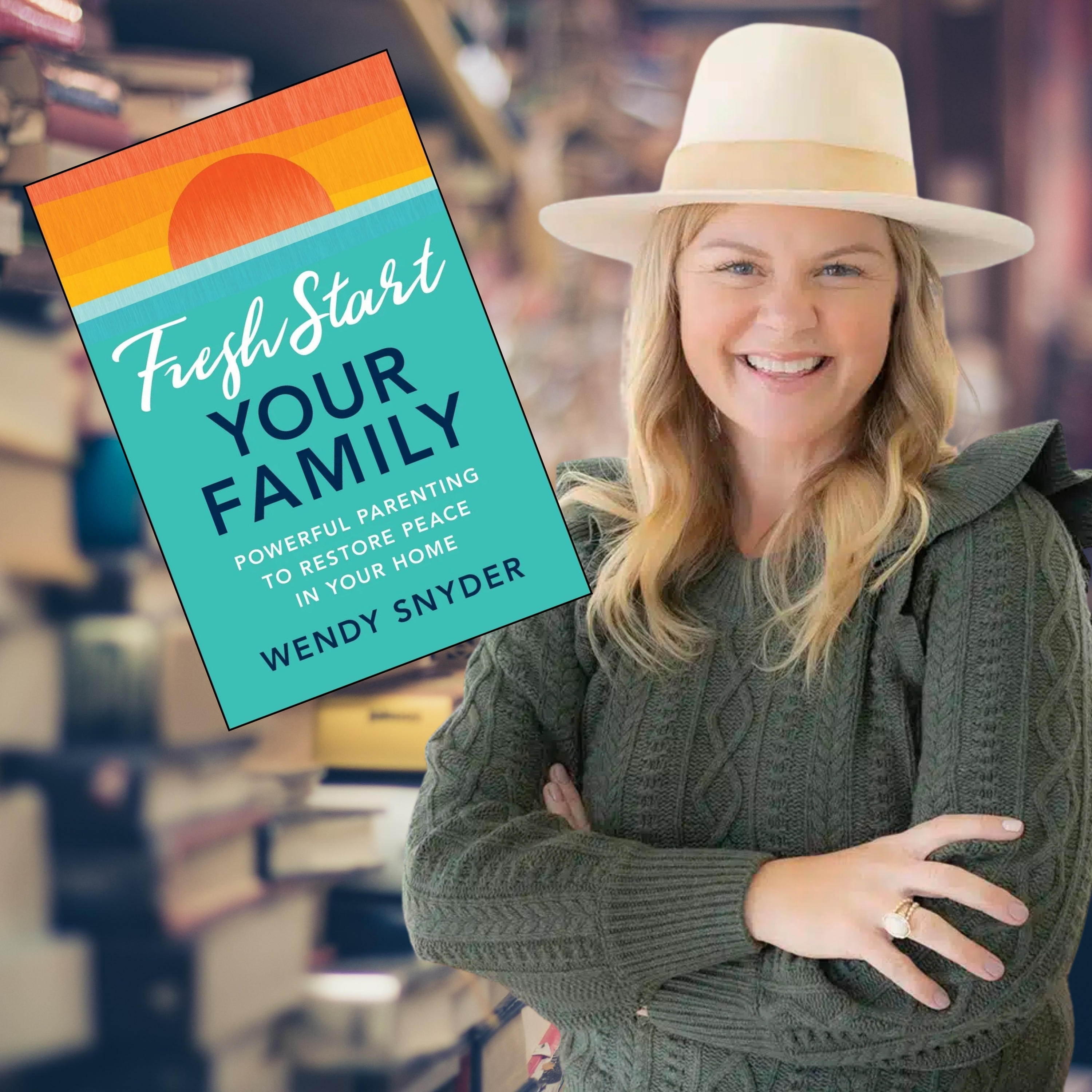
[email protected] calendar to sign up. This month we are thrilled to feature author, certified positive parenting educator and beloved OSC congregant Wendy Snyder in her newly released book, Fresh Start yout Powerful Parenting to restore peace in your Home. She draws from her own raw parenting journey to offer a supportive, practical guide for breaking painful generational cycles and leading a home with true compassion.
So settle in and enjoy this thoughtful and healing conversation between the TCT Book Club and author Wendy Snyder right here on the Collective Table.
[00:01:12] Speaker B: Let me welcome our guest for tonight. Joining us is Wendy Snyder, who is, in addition to being a member at the Oceanside Sanctuary, also a certified powerful parenting educator and a family life coach, founder of Fresh Start Family and host of the top rated Fresh Start Family show podcast.
Through her transformational programs, coaching and courses, Wendy has helped thousands of families break generational cycles of fear, punishment and disconnection, replacing them with firm and kind leadership and compassionate discipline rooted in dignity, grace and rock solid relationships. We are here tonight because she recently published her book Fresh Start yout Family. And one thing that's super fun for us is for a time when she was writing this book, Wende actually used an office right here at the church. And so we got to see her in there working away or got to say hello at the water cooler or the coffee pot and hear how things were coming along. And so we're super excited to be able to host her and talk about her book. Congratulations, Wendy, and welcome.
[00:02:20] Speaker C: Thank you guys so much for having me.
It really was so special to write this book at the Oceanside Sanctuary. It really was completely written there.
And yeah, it's just so special to be here with you all tonight and.
And I can't wait for this conversation.
[00:02:38] Speaker B: We're so excited to be able to have you. And I remember when you first told me that you were publishing your book, I was like, oh, we would love to have you on. When is that going to be? And so we planned this like last summer. Yeah, I feel like, we booked this, so it's really exciting to finally be here at this point. And one of the things I like to do when we have authors on is just start by reading an excerpt from their book. So if it's okay with you, I'd love to read a portion and then just ask you to respond to a question I have around that.
And it's on page 50 if anybody has the book.
Sorry, I had it marked, but I've lost it. Here we go, page 50.
Here's what I really love about this one. You just the setup.
This is after you have told a really vulnerable story about when you lost it with Taryn.
And when I read that, I was like, oh, my gosh, this is so brave as a parenting coach to put that story in the book, but also so relatable because everybody has lost their temper with their kids. And so I was really grateful that you put that in there. And at first, I thought that might be the quote that I read was that, like, really difficult story.
But then it got better, and so I wanted to read this part of it if I could. So Starting on page 50, it says this.
The morning after the bruising incident with Taryn, I knew I had to do more than apologize.
I needed to show him and our nervous systems that there was a different way. I sat down with my son and said, yesterday, when you wanted to go to Nolan's house, I didn't handle that well. I grabbed you too hard and yelled, and I'm sorry.
That's not who I want to be as your mom, and it's not what you deserve as my child. Will you forgive me?
Can we try that situation again?
Can you practice cooperating, and I'll practice self control?
And then we literally practiced it. I had him pretend to walk toward Nolan's house again. And this time, I took a deep breath and knelt down and practiced my stop sign.
I looked at him in his eyes with a soft smile, and I said, I know you really want to play with Nolan. You're feeling disappointed. I understand that feeling.
And you still need to stay home to rest because your body is healing, and I don't want Nolan sick.
This is neuroplasticity in action, actively pruning new pathways by practicing different responses.
In the end, I was able to fully clean up that mistake by doing a makeup for my little guy. This is something you talk about a little bit later in the book. I took extra time out of my day that weekend to build an elaborate dirt track for his monster trucks in the backyard. My way of repairing our relationship, making amends and solidifying new neural pathways, and the fact that he never deserves to be hurt to learn.
A few months later. Okay, so this is kind of a long portion, so stick with me because this is actually where I really was. Like, I have to read this part.
A few months later when I lost my cool again after he poured a whole bottle of organic bubble bath into the tub, this time just yelling, but it was enough to make him cry.
I came in to apologize and instead received a gift I didn't realize I needed. He looked me square in the eyes.
Your four year old son looked me square in the eyes with the sweetest four year old smile and said, it's okay, mama, everyone makes mistakes, and went on about his happy, playful self.
So I had to read that because, you know, I have to say that as a parent, I think maybe the most important thing I ever did as a dad was recognize when I needed to apologize to my kids.
And I remember like later, you know, because as your kids, for those of you who have older kids, you'll know what this is like when your kids go out and they hang out with other kids and their parents and they come home and they tell you you're a pretty good parent, which is great when that happens.
[00:06:52] Speaker D: Wait till your kids are in their 20s.
[00:06:53] Speaker B: Yeah, later.
one time, like later, our kids were telling us, oh man, so and so, so and so's parents are bad, they never even apologize to them.
And so. And that to me, like, was such a nice little affirmation, you know, to receive from my kids. But I think in Janelle, I think, would agree.
It seems very rare to me that parents are willing to apologize to their own children.
I think this kind of comes back to your observation that the dominant ways that we tend to be taught to parent is either autocratic or permissive.
And there's really no need to apologize if you're an autocratic parent or permissive parent.
I wanted to start with that
[00:07:42] Speaker D: little
[00:07:43] Speaker B: bit from your book and ask, you know, why do you think it is that so many parents have a hard time apologizing to their own kids when they've made a mistake?
[00:07:55] Speaker C: Yeah, well, first off, it was so special to have that. This is the first time I've ever had the book reread back to me at all. I've done a huge PR tour, we did almost 40 podcast interviews, and no one has read the book yet. And so that was very emotional to hear. Hear that section of the book, especially on the day about My little Guy, who's now 15 and 6 2, just landed in New York City with his dad and is seeing New York City for the first time. And that's just so cool.
So I will say, yeah, about the apologizing, I think, you know the subtitle of this book is Powerful Parenting to restore peace in your home.
And the way I see it is humility really is, to me, the story, the greatest superpower that we have as parents. It's relationship too, but the humility I find. And at this point, I've been. I've had the honor of helping thousands and thousands of parents and also, of course, parenting my own now for 18 years. But I'm telling you, the humility just shapes souls in the most beautiful way. And.
But society sets us up to think that it's weak and that is just heartbreaking because it causes people.
And really, I could riff on this even deeper and say the reason why society sets us up like that is, in my opinion, is because of the way most people are raised in the autocratic way from day one. And again, like I talk about in chapter one, I think I put right in the book that we are not here to judge. There's no judgment for past generations.
And we just have had so much knowledge and education around human development and psychology and the way the brain works and all the things, right? And so we just have access to so much information now.
And the way most of us were raised is when you made a mistake, you were going to have something bad happen, right? Whether it was like just on the emotional side of shame or disappointment or name calling or humiliation, or many families grew up with the physical side, right? Like you were, you were physically going to get hurt and harmed. And then for our families that we help that had the high control religious circles too, then they had on top of that that it was because of God wanting their parents to do that, right? So there was that spiritual, very traumatic side of it. Whereas as they were getting hurt and harmed for their mistake, they were being told it's because God wants that and because that is love, right? So there was all these elements that so many people grew up with on that spectrum that just shaped our nervous systems to believe that mistakes are bad.
And so when you make a mistake, it's way safer to hide it, to deny, to justify, to defend, to blame than it is to be like, dang it, I made a mistake, right? And so so much of this book and my work is about teaching parents that the real truth is that mistakes are opportunities to Learn. That is how we learn as humans. That's why when you are working with a little working if. When you have the honor of being together with a little baby. I got to watch my five month old little cousin this last weekend up in Mendocino. I had him the whole weekend. It was so wild to be in charge of new life after just this last year. My eight, my little girl turned 18 that so much of this book is about. But when he starts walking, his name's Shepherd. When he starts walking at a year ish, you know, he's going to take some steps, he's going to fall. And we don't say to him, you idiot, like, what are you thinking? Like I've told you a million times, put one step in the front of the other.
[00:11:50] Speaker D: Right.
[00:11:51] Speaker C: Like you would be crazy people. No, we're like, it's okay, get up, I'll hold your hands. Try again. You can do this. Let me teach you how to steady your feet, how to bend your knees, right? Or I have tons of little people in my neighborhood and if they're on a hill, they fall backwards on their butt, like stand on the flat. You know, we just teach. But somewhere along the line it changes. Usually about three or four years old. And then all of a sudden mistakes are shameful. So that's a long answer, Jason, of I really don't think it's our fault of why we, why we have a tendency to think that apologizing will make you weak or think that make you, you know, your kids not respect you. It really is. It's just, in my opinion, it's a result of a system. And I think we're so good at Oceanside Sanctuary of having the courage to the audacity to think that we can change systems of harm. And to me, the way we raise children is the biggest atrocity of all because it's a system that most, most like the predominant system is really based in overpowering force, shame, punishment.
And so that's. That's the why.
[00:13:03] Speaker E: Yeah.
[00:13:05] Speaker B: So thank you so much for unpacking that.
It makes so much sense, I think, and I think a lot of us can really identify with that. Janelle and I have a couple of questions, as you know, that we've prepared for tonight. But before we jump into the next one, I want to just tell everybody who's on here that your questions really are welcome to. So if you have a question for Wende, whether you've like dug into the book or you're just curious about the book and you haven't had a chance to read it yet? That's okay. Pop your questions into the chat, and we'll be watching the chat, and then we can call on you. And this can be as much of a dialogue as you all want it to be or not. Nobody has to ask questions, but I just want to make sure you guys know that that is available.
Do you want to.
[00:13:50] Speaker D: Yeah. I didn't know if anyone before I moved on to our next question. Like, on apology and the difficulty of being a parent, I feel like, especially with your teenagers, because I feel like then they really get you.
Does anybody have any questions specifically about kind of apologizing? I know we have, you know, maybe chat questions, but anybody?
[00:14:18] Speaker C: I will add a question, too, of, like, has anyone ever noticed how quick someone else is to apologize when you apologize?
[00:14:28] Speaker E: I don't know.
[00:14:29] Speaker C: I noticed that so much with my kids that I'm like, this modeling stuff really works, right? Like, you go to humility, and then all of a sudden they're quick to be like, actually, actually, you know, I'm sorry. Or it was. It was partially my fault. And it just, like, you just meet each other. Right?
But yeah. Any questions on apologizing or like, a lot of times, as you learn this work, it' like, it sounds cool in concept. Right. You're like, great, but your body will often be like, I don't know. Right. Like, our body has a way of holding onto things. And so a lot of times you'll feel a resistance of, like, yeah, but.
Or I feel like my kid might take advantage of me, or they'll try to manipulate. So any of those questions are welcome too. Like, the resistance is welcome. Yeah.
[00:15:20] Speaker E: So my question's more about, like, timing of an apology. So, like, obviously, when you're being reactive to a situation, it's hard to apologize in that moment. Is there any time period that's, like, too late? Or, like, if maybe it's a day later or a few days later, like, do you find any difference? Or, like, is there any recommendation for, like, time afterwards?
[00:15:43] Speaker C: You know, I always say it is never too late. I work with a lot of families who. I say, imagine if you had parents who followed a certain system and then one day was like, you know what? I've been learning about this now. I have grandkids, kids, and I just want to say I'm. I am really sorry for some of the things that I did to you or said to you. I just. I. That's what I knew back then, and you didn't deserve that. Right. Like, in your 40s or 30s, you would be like, thank you. So I really, it's never too late. And you know, I, I would say just get yourself regulated. That's the most important thing, right? Like, I am not a super fast regulator.
Even after 15 years of doing this work. I do come from a very highly, highly reactive family.
So my mom was a yeller. My dad like flies off the handle. My brother was just like really reactive, right? So I think my little nervous system just absorbed that.
But there are days still where I need and my kids are older now, so it's a little bit easier to do this. But sometimes I just need a night to myself.
And I always joke, not joke, but I say I spend time just kind of walking myself off the ledge, right? So I might, for me, it's always like a lot of emotional literacy work happening. It's like my, this little side of my brain might be like, they never listen and this is their fault. And if he would just. And then the other side is like, okay, like, all right, regulation, all the logical stuff that I know, what is it that you're feeling, right? So these like little devil angel do their thing. And sometimes I can do that in an hour, sometimes it takes me longer. Right, but so you just want to. I think it works best if you can come back to the situation once it's the emotions have kind of moved through you and your. We, as I say in the book, often, like emotions are at room temperature again because we're never going to be a great teacher, they're never going to be a great learner. When emotions are still heightened, when they're spiked, when those nervous systems are not in that regulated zone.
So that's the most important part. But kids are so smart. They don't forget, right? So we. There is just, there's no danger if you need a few days or if it just is so hard in your family lineage to apologize, it might take you a few days to get the courage, it might take you a week, it might take you months to find the courage, you know, because again, the body will prevent it quite often.
Does that help, Tara? Yeah.
[00:18:24] Speaker E: Yeah, I guess. My follow up question, though, obviously we have a teenager. What if they're not receptive to the apology? Like you go the next day to try to like apologize to them and
[00:18:35] Speaker C: they're just like, I don't want to hear it, I don't want to talk.
Well, let's talk about apologies here for a minute. Let's riff on that for a little bit. So we have A whole podcast episode called stop saying you're sorry. Actually, this is funny. This is going to go in, like, a totally different direction right here.
So our. Our podcast is called the Fresh Start Family show. And you could just Google the Fresh Start family Show, stop saying you're sorry. But I riff on, actually what we teach when it comes to apologies.
I actually, for the most part, have replaced the I'm sorry with thank you for your grace with me. Here's what I've learned, and here's what I've. I'm committing to learning and changing. Because the classic I'm sorry actually doesn't do that much for the. That's been harmed now for the. The, like the example of these stories that I tell in the book, and this was actually very early in my parenting years. That was before I quit my habit of saying sorry. And I know it's very culturally normal. Normal to say you're sorry, right? Like, most Americans are like, my gosh, if you don't have your kids say you're sorry after they push a kid at the park, like, you're a bad parent. Well, actually, it's just. It's just cultural.
So instead we say, if you can take full responsibility in a way that's like, this is what I'm committing to changing. And you didn't deserve that. And it's okay if you're still mad at me, right? But the I'm sorry is actually not to gain their forgiveness. It's not to smooth things over. It's just to, I think, again, like, go into that place of humility that softens our edges and helps us realize that we don't know it all. Like, oftentimes, our kids are such great teachers. And in my opinion, they are often the ones. I mean, for sure, Stella has been my greatest teacher in life. And those moments of humility that I get to say aloud but didn't go like I wanted it to, and you didn't deserve that.
They soften me, right? And I think bring me closer to God and to Christ and to be able to be chiseled. Chiseled or whatever. So maybe Tara, it's. If. If she's. Or he is not accepting the apology, either they're still dysregulated, or there's probably just a history there of people thinking, you know, your family might have a bit of a history of, like, you say you're sorry and you move on.
Right? And if you're anything like me, where it's like saying I'm sorry probably won't end the behavior, right? So it's like, kids catch on fast to, like, you say that, and then you're just gonna yell at me tomorrow or, you know. And so, again, the humility piece of looking at it and being like, it makes sense why that feels empty, that, I'm sorry, might feel empty to you. And here's what's new this month, right? Like, I got to do a book club. I got to sit with an author, and her stories were really impactful. So I'm still working on it. Thank you for your grace with me. I'm a work in progress. I'm imperfect.
You know, sometimes the delivery might help a little bit, but they hear you. Even though they might reject it, they hear you, but most of the time, it's just the patterning within the family.
[00:22:01] Speaker B: I really like that. Thank you for your grace with me. It's okay if you're still mad at me. We don't know it all.
[00:22:08] Speaker F: Yeah.
[00:22:09] Speaker G: Yeah.
[00:22:09] Speaker C: That's good. It's so good. Yeah. When you really look at the. The normative of I'm sorry, it's like, you know, we say to someone, oh, I'm so sorry. What do we. What do they say?
[00:22:21] Speaker D: That's okay.
[00:22:22] Speaker B: Or it might be, well, I'm sorry.
[00:22:25] Speaker C: Right.
But we are waiting for them to say it's okay.
[00:22:29] Speaker B: Which is like, I'm not sorry, but
[00:22:31] Speaker C: I'm gonna say, yeah, that is the cultural norm. So that teenager is probably like, no, it's not okay. Right. So.
Yeah.
[00:22:39] Speaker D: So one of the things that I really liked was, like, on around page 153, 151, you talk about the sacred work of heart healing, and when we get into kind of apologies, you use the term own your part.
[00:22:58] Speaker C: Yeah.
[00:22:58] Speaker E: And.
[00:22:59] Speaker D: And so, Justin, I'm sorry seems like, like you said, a cultural. But when you say, hey, thanks for having grace for me for xyz, this is something I'm working on.
Like, it. I think it changes because it actually has some meat to it, some substance. And I. I think for. And like any of us that are looking for somebody who hurts us to have apology, we want them to see their part in what happened within the breach of relationship. So I loved that. That wording and. And thinking through that, because I think when we own our part and then like, later you say, write a letter or.
Or just in our words, that feels like a big part of it.
[00:23:54] Speaker C: Yeah. Yeah. And that particular section Janelle is in, how to redirect revenge, misbehavior, which is so sticky. Right. And.
And our Ability to see the hurt, hurt and hurt back pattern is, is just such a great example of powerful parenting. Because then once you see the patterning, you really start to become capable of creating a change in the environment.
But yeah, a parent taking responsibility for their part when a child feels hurt and then hurts back. Right, because that mistaken belief behind any human being, whether they're the tippity top of leadership and they believe war is necessary or they're a parent, that's tends to autocratic ways. But the belief system is that.
And when I feel hurt, I must hurt back often because that's what's been modeled to me. So as soon as you start to change that and just realize that there's both sides of that hurt, dance and take responsibility for your part and just show them you're no longer going to hurt back with punishment.
Like it just that is that like cycle disruptor. That really helps.
[00:25:09] Speaker D: You have another question you want to keep going?
[00:25:10] Speaker B: I do, if that's okay.
[00:25:11] Speaker D: Yeah.
[00:25:12] Speaker B: So I.
So you and I have just very briefly talked about how this is not an explicitly Christian book. And you mentioned like during our announcements at church that it's not an explicitly Christian book, but it comes from a place of genuine authenticity where your values as a person of faith overlap. And then you keep mentioning God in your answers here tonight, which I is kind of fun.
[00:25:37] Speaker F: So.
[00:25:38] Speaker B: So I'm wondering if you could maybe unpack that a little bit for us. Like how does this, how you worked this out, how does that correspond to your faith journey?
Especially maybe how you came to see power differently and parenting differently.
[00:25:56] Speaker C: Yeah, so I did bring some of my favorite like specifically Christian books to recommend here in a little bit that I think are great sister companions to mine that I'll speak to in a minute, but I'll just kind of riff in like a direction that felt, feels, feels right.
So when I was growing up, I did not grow up in the church at all. I grew up in Maryland and I had have the spiciest mom who grew up very strict Irish Catholic. And she was adamant that I was not going to be indoctrinated.
And she just, you know, I just never went to church as a kid. My dad later ended up becoming a Quaker, which has just been really fun to get to go to his church as an adult.
We had our wedding there. We had two weddings, which sounds funny, but one in San Diego, one in Maryland. It was so beautiful.
But my mom was like really adamant that she just didn't want to force religion on me.
And I came to know God. At about 19 years old in Pacific beach, added Disciples of Christ Church, which is just the coolest thing, because to be home now just feels like such a full circle.
And.
And then we.
After a few years, we jumped in, didn't quite realize what we were getting into, but we. We ended up in the evangelical church for about 10 years.
And I, as time went on, I realized, and especially over the last five years, how thankful I am that my mom was so hardcore about not be having me in situations where I was going to be indoctrinated or have anything forced on me.
And I used to, like, make fun of her a little bit. Like, mom, relax. You're so, you know, you're so intense. And now I'm like, oh, I really get it. So I just really respect things, like bodies of work that. That can stand on their own.
And for me, I just don't consider myself, you know, a pastor or specialist there. And at the same time, I have spent now 10 years studying the parallels and to understand. And this. This is the book that fully changed everything for me. It's called Jesus the Gentle Parent. If you could see it in person right now, it is filthy. Because all the years when I did teach in the evangelical church, that's where I started my, like, volunteer ministry that I did there for a long time. It is highlighted everywhere. It's filthy.
[00:28:29] Speaker G: It's just.
[00:28:29] Speaker C: Just the best. But it's by an author called L.R. nost. And I was studying this work for a few years and. Or maybe. Maybe even shorter, probably like a year. And I remember knowing from what I had learned, because when Stella was three and we started to have, like, all these issues, when I started to stay home, I started to ask everyone, what do I do? This kid's crazy. Like, and almost every single person, especially my friends that I would consider air quotes Christian, they just told me to hit her. They told me to. You know, my neighbor over here was like, you, oh, you got to just order this Christian book from Amazon. It'll teach you how to go in the backyard and get the switch. And then every time she misbehaves, you just get her with the switch. And that's what we did with this kid. And look how well behaved she is.
Everyone from my boss, my mom was like, oh, just give her a good spanking. And I just remember thinking, like. And I could feel it in the evangelical church, too. And I started to under. I started to learn. Like, that's so interesting. Like, a lot of these people are saying that this is this biblical way, but it sure doesn't feel right. And Stella being the amazing strong willed kid that she was, when I would try that stuff, she would freak out. Like the red flag was just like, heck no, that will not be what our family is doing.
And, and so when I found this book, I remember calling Terri and being like, Terry, this is it. Like they take every, her name's Elar Nost, every single scripture that all these people have been telling me justify hurting and harming Stella and using force and power over like she just breaks it down so perfectly. She has a Greek and Hebrew lexicon in the back that she just breaks down some of those, you know, those words that you know are just used to justify, right, punish, rod, sin, submit, train, fear, disobey, obey.
And so anyways, this book changed my life. And as soon as I got this and I read it front to back a million times, that's when I felt like, okay, I can move forward. I created a course called Jesus Guided Parenting that served my, my students, still does this day. We just give it away if they're in any of our programs.
So over the years I was able to teach all of my students the parallels, but it just, I always wanted it to be not my specialty, if that makes sense.
And then these are two women that I absolutely love for anybody who happened to grow up with those higher control situ, you know, environments. It's called the Myth of Good Christian Parenting. Marissa Franksbert and Kelsey Kramer McGinnis.
[00:31:16] Speaker F: It's.
[00:31:17] Speaker C: They've also been on our podcast and this is just a wonderful book that goes deep into all the scriptures and helps you really feel confident that that's actually not what the Bible tells us to do. And so I love both of those work as complements to my work. But for me, I just think when I look at Jesus, the humility and like the gentleness and the self control and the love and the compassion and the empathy and it just never lined up with that other way of doing things. And I just don't know. It's kind of like if anyone's ever watched Stranger Things, it always felt like the upside down world, how that had become normalized and, and it didn't work. And, and now I've had the honor after 15 years of watching it not work for so many people that find me later and either are healing from their own upbringing with like the heavy handed stuff or have kids that are later in teenage years and just rebelling really intensely. So yeah, for me it just brought me closer to Christ anytime that Christ was like, cool, we're gonna. We're gonna humble you here.
I was like, okay, okay, okay. And I've learned to, like, kind of love that in a weird way, because I just think it's good. So I don't know. That's my answer. I don't know if that helps.
[00:32:45] Speaker D: Good one.
Before I move on to question, for any responses to that from anyone in the panel, Everybody's good.
Okay. I will. Before I will tell a funny story. I was a preschool teacher when Savannah, my oldest, who's in her 30s now, was 2. And it was called the Nurturing center, which was.
They wrote the curriculum for parents in Utah who had been in trouble for abuse and were trying to get their kids back. And so any preschool teacher had to sign a no spanking of their own kids.
And I had always just grown up with spanking. And so I sat. Like, I read all the stuff. I sat with Jason.
We decided. We sat with Savannah.
Like, she must have been three. We sat with Savannah. We're not going to do this anymore. We're going to talk it out. And the first time that she totally.
I don't know what she did, but she misbehaved in a bad way and then jumped up and down on the bed and said, you can't spank me.
[00:33:51] Speaker C: You can't speak. I love that kid. And I was like, okay, this is how it's going to go.
[00:33:58] Speaker D: And just, you know, and just right when you're like, I don't know if this is going to work, like, keeping it up.
It did change the dynamic and working within the program, like, but it took a lot of Jason and I not just going back to that and going back to like, okay, we gotta talk about this and how we're gonna respond anyway. It's just made me think about this.
[00:34:23] Speaker B: Savannah and Taryn have some things in common, for sure.
[00:34:26] Speaker D: Yeah.
[00:34:26] Speaker E: Yeah.
[00:34:27] Speaker D: I think as she was ripping off her clothes, she was quite the wild one herself.
Okay, so our next question is, could you talk to us about the shame that parents feel when they. I'm going to say they feel that they don't live up to comparisons of maybe society or what they have in their own head of what a parent should or shouldn't be.
And, I mean, I think that can go both ways because it's the. It's deciding to go one way and having family members say, you're not spanking enough or your kid. You. Are you disciplining your kid at all?
Or you're over disciplining because you're not completely permissive. So could you talk about like that shame and maybe how we stand in this knowledge a little bit?
[00:35:14] Speaker C: Yeah.
So two sides of that. So when, when we're looking at what others expect us to do. And yes, if you are gonna dive into this way of parenting, whether you're. It's your kids or your grandparent, I feel like we have grandparents here and I just love to see that so much. It makes me so happy.
You're gonna have. You're gonn black sheep for sure. So most people around you will give you the eye.
And so that side of things is more like. What I see people really struggle with is fear. So that's fear of judgment, fear it won't work. Fear they're going to raise entitled brats like that they've started drinking some type of Kool Aid, right? Like they attended this zoom and read this book and now like, oh. And literally for years I remember thinking, what if I'm just drinking Kool Aid and it's not going to work and the kids are going to grow up to be insane? Right. Like there were those moments. So that's more fear, right? And that's a whole journey to stand on your own two feet and just find the confidence to parent the way that feels in alignment. I always speak about alignment. To me, like the heart is the moral compass. It's the center, right? So it's like your intuition comes from within and then the divine guidance comes from above. And like, right. You can just feel it, right? When it feels like there's cognitive dissonance there.
And then the shame side of it is more from within. It's more of thinking there's something wrong with you. Right. Like so and so many parents deal with this one where, like I see this quite often with parents who might have been in my program for a while. They'll say, they'll say things like, I should know better by now.
I've been studying with you for a year, Wendy. Right? Or they'll hide the fact that they, they did revert to spanking.
And usually in my community, they actually don't hide it because I'm so forthcoming. Like, I cursed at Stella on Easter this year. Stella's 1817. I, I cursed at my own, like, I what? And I just run and I tell my community because I'm like, guys, this is life. You're not going to be perfect. It takes you years to shed the reactive parenting. Like the nervous system takes so long to recondition and that's okay. Like that Failure is just unfinished success.
It's okay to take responsibility. You're going to make mistakes, right? So I think in our community, it does come off faster because they have someone that is modeling, like, it's really safe to not be perfect and to admit and ask for forgiveness and all the things, but a lot of people will still struggle with that. So shame is sticky. And maybe some people here might have grown up with the same messaging, but in our house, I don't know if it's an Irish Catholic thing, but my mom's phrase was shame on you.
And still to this day, my sweet mom, if my dad doesn't like, he just last time I was home and he took the trash out to walk down to the bottom of the driveway, he didn't put the liner back in immediately. My mom's just in the corner. Damn it, George. Shame on you. Shame on you. And where's the dog? If the dog gets into something, she's yelling shame on you.
So quite seriously, I realized for a good, like, it wasn't till I was about 40, I'm 49 now, that there was a few years where I started to realize, oh, darn it, this is like really deep. These roots are really deep within me.
And I realized that I was consistently thinking that something was wrong with me.
And that took a lot of intention and healing and weekend work.
And we always say that healing through feeling is where you can often shed the shame. Often also being in community with others where you can say aloud like, hey, I messed up and it doesn't make me bad, it makes me human.
And we have programs that do that. But yeah, shame is a sticky one. And what I love and that I write about in this book is Brene Brown's work is really beautiful because she's done so much, like, social research around how shame is not effective. Guilt is actually effective. Right? I think guilt is a God given, beautiful feeling. Right? If where we say, if you feel guilty, you are guilty, just make amends. It's okay, Just make amends. Do something to the repair the relationship. What did you learn from the mistake? Right? We can move through that. Shame is what like gets like, it just gets buried.
And then often it leads to hiding, it leads to secrets, and it leads to someone thinking that something is wrong with them so they can't really admit what's happening. And just Brene Brown has proven that it does does not create positive results in. It doesn't create positive behavioral change. It only keeps people stuck or moves them backwards.
So, yeah, that's My little riff on shame.
And again, shame. It makes sense that when you grow up with a punishment system, and again, there's different spectrums of punishment, right? Like some of some people just got timeouts and they got put in their room and you know, we're told don't be bad. And then other people were like, really hit and harmed for a decade or two of their life in, in combination with some really intense messages and spiritual stuff.
But either way, it's just. It's just a result of thinking that mistakes are bad and that mistakes should be hidden. So anyways, that's my little riff on that.
[00:40:56] Speaker H: Hello, Collective Table listeners, it's CJ again. A lot of people out there might not realize that this podcast is part of a real life faith community. The Collective Table podcast is a production of the Oceanside Sanctuary, a progressive Christian community whose mission is to foster collective expressions of inclusive, inspiring and impactful Christian spirituality wherever it is needed, and is a 501 seat nonprofit organization. That mission is only possible because of the generosity of people just like you. So if you believe in what we are doing, if you benefit from this mission, please Visit
[email protected] Give to become a supporter today. Together we can keep building communities of love and liberation.
[00:41:54] Speaker B: I appreciate that you brought up St. Bernay because, you know, obviously you cite her in the book and for a lot of people, I think hearing much of what she shared about her own research was really liberating for a lot of people. And you know, you mentioned her work on guilt versus shame. I really appreciate, as you unpacked, that she's so clearly delineates that guilt has to do with behavior, but shame has to do with identity.
[00:42:25] Speaker C: Yeah.
[00:42:26] Speaker B: And to me, that was a very powerful way to remember that because it occurred to me that when the messaging that you receive growing up is very shame based, at least in my experience, that guilt gets translated into shame.
[00:42:45] Speaker C: Yeah.
[00:42:46] Speaker B: Because you don't know the difference. Right. So when you're raised under a paradigm of shame, which is to say that there is something wrong with you as opposed to, you know, what you did was hurtful.
That every, every time you do something hurtful, every time you make a mistake, you end up, like, importing it to your identity. Oh, I am broken.
And all of that, I think, is so helpfully confronted, I'll say, by where you talk about how the importance of connection and how when so autocratic parenting destroys connection.
Right. But powerful parenting builds connection. I think it's a really beautiful way to think about how Parenting can be an empowering task. Right. Whereas autocratic parenting is, like, disempowering. Right. Like, your whole job is to take power away from your kids so that you have the power, so you have control.
And this gets into, you know, your discussion of, like, four things that every child needs, which, of course means it's the fourth thing that every adult needs too. Right. Like, to feel like we're powerful, to feel like we're valuable, to feel like we belong, and to feel like we're loved unconditionally. I thought that was an extraordinarily helpful framework. And I think the connection piece helps get us there. Right. Like, we have connection, then that leads the way for us to feel powerful and valuable and belong and loved. And so I wonder, when did that shift happen for you? Like, what I think is interesting is that you've even, like, changed the way you talk about positive parenting and you call it powerful parenting. Like, and that feels like actually a significant shift.
Right.
[00:44:35] Speaker D: And a good one.
[00:44:36] Speaker B: Yeah. So I wonder, like, when did that shift occur to you? Like, there. This is more than just positive parenting, that it's powerful. So could you talk about that a little bit? Like, when did you come to that? And why do you see that as significant?
[00:44:51] Speaker C: Yeah.
So it was just a few years ago that I started to realize, oh, my gosh, this is so effective. And I think there's something magical, too, with, like, getting my kid. When I started writing this book two years ago, she was getting there to almost be an adult. Right. So we started when she was three, and then she was close to 17, you know, and now she's 18 and a half. And so I was starting to get the data of, like, okay, this works. Like, this works. It is powerful in that regard of if you want to really be successful at peaceful conflict resolution, if you really want to influence other human beings, not in the way of, like, I want you to do it my way, but just more in the way I think we were designed to.
To be able to affect and spread, like, to have more good be in the world. Right. But you want to be effective, of course, at that. And I started to see, gosh, this is really effective. And the thousands of success stories that we have, we have compiled at this point with families from all over the world. That's when I realized the parents who are really doing this stuff, that always feels impossible till it's done. Right. Like, I think so much of the world is, like, that's. It's just not possible. Like, you can't not punish A kid, right? And then, of course, they put all the labels on it. And there's a thousand people that will write articles about how gentle parenting isn't biblical. I mean, the attack is crazy, but, like, people just don't believe that you can actually do this. And so as I developed my own body of work and then I had these thousands and thousands of success stories, I realized, like, these. These parents that are doing that are really getting massive results.
[00:46:34] Speaker G: And.
[00:46:35] Speaker C: And that just felt so important.
And it's not always air quotes positive, right? So a lot of times we are helping parents be more firm, more shoulders back, looking a kid in the eye and letting them know, you're not in trouble. And I'm not okay with you leaving on the bike without the helmet, whatever it may be. But, like, it's not about being gentle or positive, and it always is about connection. And what I was going to say, too, Jason, is one of my favorite things that I love to point out to parents is a lot of times when we talk about connection and relationship, we think of like, okay, well, you know, Beverly is going to take her grandkids out for a date a week, and she's going to spend time, some special reading time with them, and it's going to be this, like, special time, and there's going to be this connection. Right? Like, those are great. Those moments are great that we can do that with our kids. But what I have found is that the deepest points of connection and safety come in our children's worst moments, and we learn to create safety and belonging within those. I mean, I could just cry thinking about how much closer Stella and I particular.
[00:47:52] Speaker F: She's.
[00:47:52] Speaker C: She's the kid that, you know, there was a lot of compassionate discipline with her over the years. Terrence, like, he's just more mild child. He's, you know, you know, you read about him in the book. But with Stella, there was a lot of situations, and each one of those ones that we got a little better. We, meaning I. Terry was always super chill. I was the one that had to learn how to get air quotes, quotes. Better. I don't like to say better. Worse, good, bad, actually, as I became more fluent in my ability to just roll out compassionate discipline and not shame, which, again, was a journey. But as I grew in that, I realized, oh, these are the moments that are actually creating the most connection, if that makes sense. So reading with her every night was super cool. And letting her have her little sails out front to sell rocks to empower her.
[00:48:43] Speaker A: Cool.
[00:48:44] Speaker C: We're connected. But really the moments where I showed her grace and helped her feel like she was not an alien and that she wasn't a bad person.
Those are the moments where I feel like we're the most pivotal in creating the relationship that we have. And that's where that note comes in on page 267, where it's after that story of like where she crossed the street in the wrong way and like, you know, Jay jaywalked in the situation in a place where I thought she was really at danger of being hit by a car. Two, two years later we lost a child literally like steps away from that corner. It's crazy. A 13 year old in our town lost her life being hit by a car.
But I just think of that moment and it's like that night, the story I tell in the book about the way I was like, that was one of those moments where I was like, I did it. I rolled out the compassionate discipline really well.
And that's the note that I came home to like the next night or something, you know, like, thank you so much for supporting me and all that I do. You mean so much to me. I'm so thankful for you.
I couldn't ask for a better mom. Thank you for being there for me every single day of my life. Thank you for teaching me how to help myself and all and others in life. I love you so much. I want to be just like you when I grow up. Thank you. Love, Stella, but I don't read that as like, oh, I'm such a great mom. It's more like it's wild how effective it is and like you just gained so much power in like the light filled way, right? Like, I love Jason. A few weeks, a few weeks ago, I think you were, you gave a sermon where you were talking about like the wind and like this really powerful sources of God or fire, right? And it's like it. Power gets like a bad name. It's like it doesn't. Power doesn't need to be destructive or overpowering. It can be just this incredible vehicle for positive change.
And when you learn to like have that relationship with your kid, even in the moments where you're super triggered, they've messed up, you're worried something's going to happen to them.
It just is radical for family lineages and relationships.
[00:51:08] Speaker B: Well, we have talked about a lot and we're approaching kind of the home stretch and the time that we have. So I want to pause here for a breath and remind anybody that now is as good a time as any. If you have questions. If you want to raise your hand and ask a question, I'll call on you. Or if you want to pop a question into the chat, if you're, you know, too shy to, like, ask it yourself, that's okay. I'm happy. Janelle and I are happy to ask it on your behalf.
And while you guys are maybe thinking about raising your hand or popping a question in the chat, I'll just comment briefly that I loved your comment about grandparents because, like I will say, because Janelle and I are recent grandparents. Our oldest grandchild is three and a half. They all know that I. They all. You guys have heard this, right?
That I have been shocked to discover that I need to, like, dust off parenting skills while being around my grandchild. And that is not to say that we are our grandchildren's parents. We're not.
But you need all of these same skills because you know a three year old will test your nervous system. Right. And will trigger the baggage that you didn't know you still had around, like being disobeyed. It's amazing how you like, or how I have been like, confronted with that. So I think remembers it.
[00:52:35] Speaker C: Really?
[00:52:35] Speaker D: Yeah.
[00:52:36] Speaker B: I just think it's super helpful to be like, thinking about these things even as grandparents.
[00:52:41] Speaker C: Yeah.
[00:52:41] Speaker E: So any.
[00:52:42] Speaker B: Any questions? Yeah, we have.
[00:52:43] Speaker C: Beverly, hi.
[00:52:46] Speaker G: Along those lines, myself as a grandparent and what Wendy, you're talking about the connection in the grace in apologies.
Major is a very strong willed person.
And when I had the privilege of taking care of him, sometimes I'm not the best grandparent. And we got into a little tussle sometimes where we were saying things to each other that were not appropriate really. And a little while later, I came back and I apologized to Major. I said, major, that what I said to you, I'm very sorry, I should not have said to you.
And he in turn said, baba, I'm sorry too. I should have said that to you. And that was such a bonding moment. Right. Where we both admitted that we were not the best people at that time. It was wonderful. It was a wonderful bonding moment. So just like you say, that's where the graces. That's where.
Yeah. The hard times turn into the best times. Right.
[00:53:54] Speaker C: It's so true. I really firmly believe that our kids learn more from us when we mess up than they learn from us when we like, get it right. You know, I just feel like we
[00:54:05] Speaker G: are modeling for them. We are the model for what, Whatever.
[00:54:08] Speaker C: So, yeah, it's so beautiful. Beverly too, like all, all parents, grandparents.
[00:54:13] Speaker E: But.
[00:54:14] Speaker C: But My mother in law, her name is Beverly and you might have met her at church. But she, she really was an example of a grandparent who, when we had our second, she moved from Maryland to San Diego and she just jumped in. She was like, okay, I'm going, I'm going to go to class, I'm going to learn this. And then she spent like she had a special date with both of those kids once a week for 15 years or something. 12, I mean probably 12, 12 years before they became teenagers and realized like, you know, whatever, but. And she, I mean it was just so cool to see how much she learned. And still to this day she is learning. So it's just, life is one big constant learning, right? It's just like it should be. Yeah, I love it.
[00:55:04] Speaker D: Anybody else?
[00:55:06] Speaker C: And you guys can always Instagram dm, Me too. If you want to ask a question that feels like a little bit more vulnerable or something and you don't want it recorded, feel free, just tell me. Hey, I'm from Oceanside Sanctuary. You can leave voice memos really easily in Instagram, which I find nice. I don't always love Instagram, but you can Also email me wendyreshirtfamilyonline.com Lots of different ways to. I love voice memo. I love voice memos. I feel like they're a great way to talk.
So feel free to reach out.
I have a question.
[00:55:36] Speaker D: Oh, go ahead.
[00:55:39] Speaker I: I. I know, you know, in the scheme of strong willed kids, you know, there's certain like phrases like I have one kid who's definitely like very strong willed.
I was trying to think of name that I, I learned when I was, when he was much younger. I think it was an integrity child. Are you familiar with that phrase?
[00:56:04] Speaker C: I haven't heard that one, but I like it like it's an integrity.
[00:56:09] Speaker I: It's the word where they cannot act on something if it doesn't feel to match on the inside of what feels right.
And so if you're to impose something such as a direction and it doesn't like match what is on the inside, like it just causes all kinds of, you know, craziness. So I was going to ask your, you know, if you could just reflecting on your experience of raising a very strong willed, possibly also an integrity child, your daughter, how did you find the most effective way for when you needed to give directions, you know, as opposed to it suddenly becoming a power struggle where they have defied me. There must be a consequence. Like we don't want to get into that loop. Like, could you Just sort of give a, give a few minutes about, you know, your, your basic how to, how to win the buy in.
[00:57:09] Speaker C: Yes. And I did.
[00:57:11] Speaker I: Yeah. If there's a whole chapter on this, you can just point me to it. I did order your book, but.
[00:57:15] Speaker C: Good, good.
[00:57:16] Speaker I: It's been the end of school and I have not had a chance to sit down with it yet. So if you want to just give me the June.
[00:57:21] Speaker C: It's crazy.
[00:57:22] Speaker I: June doesn't have tomorrow'.
So we are almost through Maycember.
[00:57:27] Speaker C: I know it's June, but it's still May sober.
[00:57:29] Speaker I: Yes.
[00:57:30] Speaker C: Yes. So like the fast answer is just. It is the empathy. It is like my favorite phrase is like, you're not an alien. You're not in trouble. You make sense to me, right? Like it makes sense. Of course you don't want to wear your helmet. Of course you want a cell phone or an iPhone in the seventh grade. Every single one of your friends has one. Like I can't even imagine, right? Or like the day that story, I tell you that that note got written to me where she crossed the street in the wrong way. Like, it's like, I get it. No wonder, like when you're 12. I remember being 12 and all I wanted was to belong. All I wanted was that triangle on my butt as the gas jeans, right? Anyone remember Gus jeans?
You just desperately want to belong, right? So to go a different way to, you know, so empathy is like such a superpower and that can do wonders, you know. But, but speaking of, there is, there is a chapter in there, Deanne, that's around our four step, firm and kind process.
And that is one that if you can, if you can like create a little bit of full mastery around that and just get into the habit of doing it, it works really well. And I'll just summarize it real quick. So first off, it comes to agreements now with strong willed kids again, they get their mind going, right? So they're like, I'll give you the example of seller, right? Like in our home we were adamant that the kids couldn't have an iPhone till high school, right? The work of Jonathan Haidt has been really, as a podcaster, I just know the data. I'm like, like this is going to be really hard and we're going to do it. You're not going to have an iPhone till high school. But for Stella, she presented to me a million times. Sometimes with tears, sometimes with anger, less anger, more just tears and just disbelief and trying to convince me why that was dumb, right? Like everybody Has a cell phone, like, I'm gonna die without an iPhone.
And it was. Those years were so painful when she was just so alone in not having the iPhone. But we did so much education work. So the first step of this process, I'll summarize the four steps and then we'll kind of, I'll break down each one. So the first step is you make proactive agreements as much as possible. So anything that's a repetitive thing.
So wearing your helmet, you know, sitting still at the dinner table, going to bed by 8pm Right. Like not having devices in rooms, whatever it may be.
And then you explain with education the why and a lot like the past, you know, the past cultural conditioning is like, well, a kid should just listen because they're told to.
It's just never going to work with strong willed kids. Like if we don't spend time educating them and especially if you can bring in some data and some science sense, it's just, it's. They're gonna always push back on it. So the education piece of like it makes sense why this is hard for you and here's why. It's an important family value. Here's why it matters to us, right? Here's the data and the science behind it.
And the biggest thing there, Deanne, and everyone is if you can find a way for it to benefit the kid. So strong willed kids are notorious for, you know, it takes them a little bit longer to be often the, like, I'm looking out for everyone around me. They're in the early years a little bit more like I'm looking out for me. And so, and as they get older, they develop that ability. They really do. Their, their journey is just comes a little bit later. Their maturity in that like Stella got us all the nicest Christmas gifts last year and we were just like, who is this kid?
So, but in the beginning it's like if you can empower them with the why and the education behind it and help them understand, this is going to benefit you too. Right? So this is why it's important for me to prevent a traumatic brain injury on you. Right? And we do some, we, we might bring in some education not to scare them. It is never to scare them. I'll often tell my families, if you are walking and you see a little worm or a little frog that's been hit by a car, please stop and show your children it is not to scare them, it is to educate them that cars are legit, legit, not something we can mess with.
So anyways, that's the education piece. Then when they push back, which they will, then you go to empathy. It's like as fast as you can. And this takes practice. But it's like, hey, I get it. No wonder you don't want to do your homework. No wonder you don't want to put on your shoes. Right? No wonder. I get it. You make sense to me. This is that belonging piece. When you pour into belonging, our behavior goes up, misbehavior goes down. And then the third step is you engage their critical thinking skills. Because strong willed kids especially, they love to know the answer. They like, they want to be in charge, they want to know everything. So if you, you can ask them, and what was our agreement? And you want to make sure you made that agreement in a calm time, not when they're heightened and begging for the iPhone.
What was our agreement? And then you wait.
You don't tell them you don't like. You just wait, right? And give them an opportunity to remember. And then you just move to choices, which is an empowerment prompting strategy, which when you're filling up their need to feel power, powerful, their misbehavior often will go down. So it's like, so do you want me to help you put your helmet on or do you want to put it on all by yourself? Do you want to get a Gab Kid safe phone or do you just want to like go phone free? Stella chose like, she could not handle using the Gab Kid safe phone even though it looks like an iPhone. So she just went, no phone. And I was like, that's okay with me. Because back in the day you would send a kid to a play date without a phone. It was okay, right? But that was a choice I gave her of like, hey, you can have this kid safe phone or you can have no phone at all. It's up to you. You can hold my hand or you can put your hand in my pocket as we cross the street. Which one do you choose? So point being, when you roll out that four step process and you kind of just make it a language, you start to like, do less of this with the power struggles and you start to just get used to it. You just expect the pushback and those kind of elements can help.
So yeah, that's my thoughts there. What are your questions after I say all that?
[01:04:19] Speaker I: How long did it take?
[01:04:20] Speaker G: I just want to say that when you have educated the child to understand, that redounds to the younger child. Because I've seen that with, with Major and Archer, like Archer, do you know why you shouldn't go out into the street and then, you know you've succeeded. Right.
[01:04:38] Speaker C: Yeah. Yeah. The little ones, they really soak it up. They do.
[01:04:41] Speaker G: They take it in.
[01:04:42] Speaker I: They really do.
[01:04:43] Speaker C: It's true. It's true. Beverly. And yeah. Deanne. Oh, my gosh. So it took me eight years to stop yelling.
Eight years.
I'm pretty sure I write that in the book.
Eight years.
So the answer is it took me a long time. But.
But I was. I went heavy. I. And that was heavy. In this work. I was at personal healing weekends twice a year for a decade. Even longer, maybe. Yeah, a decade. I was in personal deep healing weekends. I had parenting mentors. And then after a while, I started teaching. Right. Which teaching is lovely because it really holds you accountable.
And it still took me eight years to stop yelling. You know, I've said to my daughter, she was probably 11 years old, can you just stop being you?
Which is one of the worst.
It was so sad. And I was like. As soon as it came out of my mouth, I was like, oh, darn it. That was a bad one.
That was a bad one. Right? Like, again, I don't usually like to use good and bad, but that moment, that was just like, shoot. I literally. It's just, you know, the stuff. I knew that it was from my childhood, it was a different version of shame on you.
So, yeah, you just learn to have a lot of grace with yourself.
[01:06:07] Speaker D: And.
[01:06:08] Speaker C: And I think I will say this.
There is the. Actually, the. The most magic in becoming fully mastered at this work is in the after.
It's in the after.
I mean, I have students who are in, like, my high level certification program, and it'll be a year or two, and they're just like, why is this still so difficult? And we just work on the after. It's like after it happens after you yell after, you threaten. Right. We just. The next day we go through the process. It's like, okay, what did we learn? What was the trigger? What was that space between the stimulus and response? What was the protection? Learning or open close, that I write about later in the book.
And you just reflect, and then you commit to making the change tomorrow. And every time you get a little bit of a lift, or you might. You. You might try that, and you might remember one step, you celebrate.
You gave empathy before you threatened.
[01:07:06] Speaker D: Cool.
[01:07:07] Speaker C: That's progress.
But a lot of people just get hung up thinking that they. And that's where that. When I said earlier when Jason and Janelle asked me about shame and I said a Lot of parents, the shame will show up. And I should know this by now, what is wrong with me? I've been studying, you know, and it's just, it's just not like that. The body takes a long time.
[01:07:30] Speaker B: Well, and it's maybe it's helpful to remember too that, you know, your kids are going through their own developmental process, right? And like in, in our experience raising our kids, they're definitely, I mean, and this is so cliche, right? But there are times when it's easier to connect and times when it's harder to connect. And part of that is recognizing something that I mentioned earlier, that like, I have my own needs to feel powerful and valued and belonging and, and unconditional love. And it's so silly that when your child challenges your sense that you're unconditionally loved by them, that it affects you. But it does because it brings up all those, those embodied harms that you yourself experience. Right? And so one of the things I like about what you said, really appreciate about what you said is by naming empathy as a good way to respond to a really strong willed child.
Again, what you're saying is, what's really important here is connection. Because we know that what happens when we exercise empathy is we're drawing close to another person, we're connecting with them in a more, a more authentic way, right?
And the opposite of that is to distance yourself from somebody. And you know, when we're in an autocratic power struggle with our own children, what we're doing is we're adversaries. We're like, no, I don't understand why you want to do that. Like, we dig our heels in and increase the distance. And so I love that you named empathy because really does mean that if you say to your strong willed child, I really understand.
I know what it's like to feel this way. Not in a sort of condescending way, because you can do that too.
But you know, I can understand why
[01:09:31] Speaker A: you would want that.
[01:09:32] Speaker B: That makes perfect sense to me. I like the way you phrase that. Then that draws you a little bit closer together instead of making you adversaries.
So I appreciate that. And then it also occurs to me that in the after work that you named, that is practicing self empathy, right? Like you're saying, oh, right, I see what happened there. I see why I did that. I don't like it, but I'm still experiencing my own triggers. I'm still experiencing my own insecurities reacting from that place. That's a place where you're a You're saying to yourself, I get it, I understand why you did that. I don't like it, but I understand it.
And I think that's, that's a really important piece of what you're talking about too.
[01:10:13] Speaker C: Yeah, and it's like a mix with humility too, right? Like it becomes a game when you're trying to master this stuff with empathy. Because a lot of times when it's, when you're not giving empathy, you're kind of stuck in a little bit of judgment, right? It's like, oh, why would you do that? And so if you can try to recall, like, where have I felt like this? Where have I done this? Where, like, even if it was when you were 10 or 15, it can just help you like that, that humility piece of, oh, yeah, I've felt like this before, or I've done this, or I've broke the rules before.
So the humility and empathy kind of go hand in hand.
[01:10:55] Speaker B: Okay, so I have officially kept you all as long as I said that I would. So I want to just pause here and ask if there are any other final questions or comments that you might have for Wendy before we let her go and sign off for this particular episode.
[01:11:11] Speaker E: I just wanted to. Sorry.
[01:11:13] Speaker C: Oh, I should have raised my hand.
[01:11:14] Speaker F: That's okay.
[01:11:16] Speaker E: No, I just wanted to say when you were answering DM's question, I thought it was interesting because you kind of brought up choice.
Like I find with a strong willed child, giving them some choice, even though it's still towards the goal that I want for them, giving them some say in the process, like, say, you know, like, like when my daughter comes home from school, you know, she wants a break. She's 15, so she wants a break, you know, and she's had a long day at school. She's. I understand that, like, you know, rather than just doing her homework right away, or if she needs to do a chore, you know, and she's not ready to do it right at that moment, instead just forcing, like putting my heels in and saying, you have to do it right now because that's just going to push more issues back and forth. I usually will say, okay, I understand that you want a little break.
Let's talk about how long of a break and then you have to do your work after this. And she's pretty good. If she says, okay, I want 30 minutes or whatever, I'll be like, okay, and I'll set the timer so that way she doesn't lose track of time. I'll actually set A timer in our kitchen. So it goes off and then she'll stop, she'll turn off the TV and then go do her work. But I find having giving them a little bit of, say, or a little bit of choice, it's still doing, you know, what you like, the goal that you want them to, you know, reach, but it's giving them a little bit of that, that choice, a little bit of that say in the process.
[01:12:30] Speaker G: Yeah.
[01:12:31] Speaker E: Is helpful.
[01:12:32] Speaker C: Yeah. Which is a way to pour into their need to feel powerful. Bucket. Yeah. One of my favorite things to do with my teenagers at this age, if they're like bulking at something and they're
[01:12:41] Speaker B: like, oh, I don't want to do
[01:12:42] Speaker C: this, I'll be like, cool, I'll do that. You can go pick up all the poop in the backyard. Like, do you want to do that? Because I'll switch with you, no problem. You know, and they're often like, fine, I'll do the dishwasher or whatever. So you can have fun with choices. Like, you really like you again, it's a muscle, right? It's a muscle. And like, the more you start to see, like, there really is quite often an opportunity to give a choice. Now sometimes the most strongest willed kids, they will push back even then. And that's okay. You know, that gets into the question of, like, what if you give them a choice? And they say neither. Right. And we teach to that.
But it kind of becomes a fun game, a little bit of like it is. And it's signaling to the nervous system too, that it is safe to not hoard the power. Right. Like, that's the thing. That's why our nervous system responds like the way we do. Right. When. When we might be reactive or, or jump to threats or punishment or bribery. It's just the nervous system, like, it feels like that's safe because that's what it soaked up the first decade or two of life. Like, it saw people.
That's how you got power. That's how you got control. Right. So when we start to give more choices, it's like little bits of data that, like, it's actually safe to share the power with our kids. And. And it's effective. So thank you. Tara. What? Leanne, you were going to say something just really quick.
[01:14:04] Speaker F: You know, as a grandparent, I just feel like this is such a wonderful reminder for me to take that, to really be able to breathe life into my grandkids. Because when we go visit them, they're in Northern California. We stay for a long time. So like for four days.
And so we have those opportunities to see this. The good, the bad, the challenging. So this was wonderful. The other thing I was thinking about is so much of this book, you know, as I'm reading through is just good, good to be as a human being and, and just to look at things in a different, for some people, in a different light on relationships and whether it's with child, grandchild, spouse, you know, and I just, I appreciate it. And so that's all I wanted to share. It was very good.
[01:15:02] Speaker C: That is such wonderful feedback. It is true of this work. We think it's parenting, but it's really life.
[01:15:11] Speaker G: Just human relationships.
[01:15:13] Speaker C: It's just human relationships. We're just practicing. And when you get really good at this style of leadership in your home, you become a better boss. You become, you know, a better co worker or team member, neighbor. Like, it's just these little kids, which I believe are our closest neighbors.
[01:15:31] Speaker B: Right?
[01:15:31] Speaker C: We as a church, I know we really believe in loving our neighbors. These little turkeys are our closest neighbors and they give us the best practice.
What does it really look like to truly love your neighbors? And then once they give you the practice, you work out the kinks and then you become just more able to do it out in the world.
[01:15:49] Speaker I: So.
[01:15:51] Speaker B: Well, Wendy, we can't thank you enough for spending time with us. Just as a reminder to everybody, it's Fresh Start yout Family by Wendy Snyder, written right here in this building by this amazing human being. Thank you so much, Wendy.
[01:16:04] Speaker G: Also available from your library.
[01:16:07] Speaker B: Also available from our library. Yes, we do have at least one copy of this on file at the library. You can check it out.
Also, Wendy mentioned two books tonight that really impacted her and I popped the links in the chat to those two books as well. And so if that's, you know, something that you're interested in, click on those or. She very graciously invited all of us to connect with her on Instagram. If you have any other questions. And my experience is that Wendy's always very responsive even though I know she's very busy. So thank you very much for being generous with your time and one request, one request. Yes, yes.
[01:16:46] Speaker C: Like five of us. Here you guys go. Leave the book a review if you can. Even. Oh yes, simple, you know, like this, this part was interesting. Or reviews really help first time authors. So thank you in advance for leaving a review if you can. It would mean the world to me.
[01:17:01] Speaker B: 100. Happy to do that.
[01:17:03] Speaker C: Nice.
[01:17:03] Speaker B: All right, thanks so much you guys. I hate to keep people later than I promised, so I will let you guys go, but have a good evening. Wendy, I hope you sell a million more copies of this book by the way.
Guys, have a good night.
[01:17:16] Speaker C: Thank you guys.
Bye.
[01:17:23] Speaker A: Thanks so much for joining us for this episode of the Collective Table Podcast. If you enjoyed the podcast, please consider leaving us a review. If you are interested in the broader work we do here at the Oceanside Sanctuary, please visit us online at www.oceansidesanctuary.org. we will see you next time.